
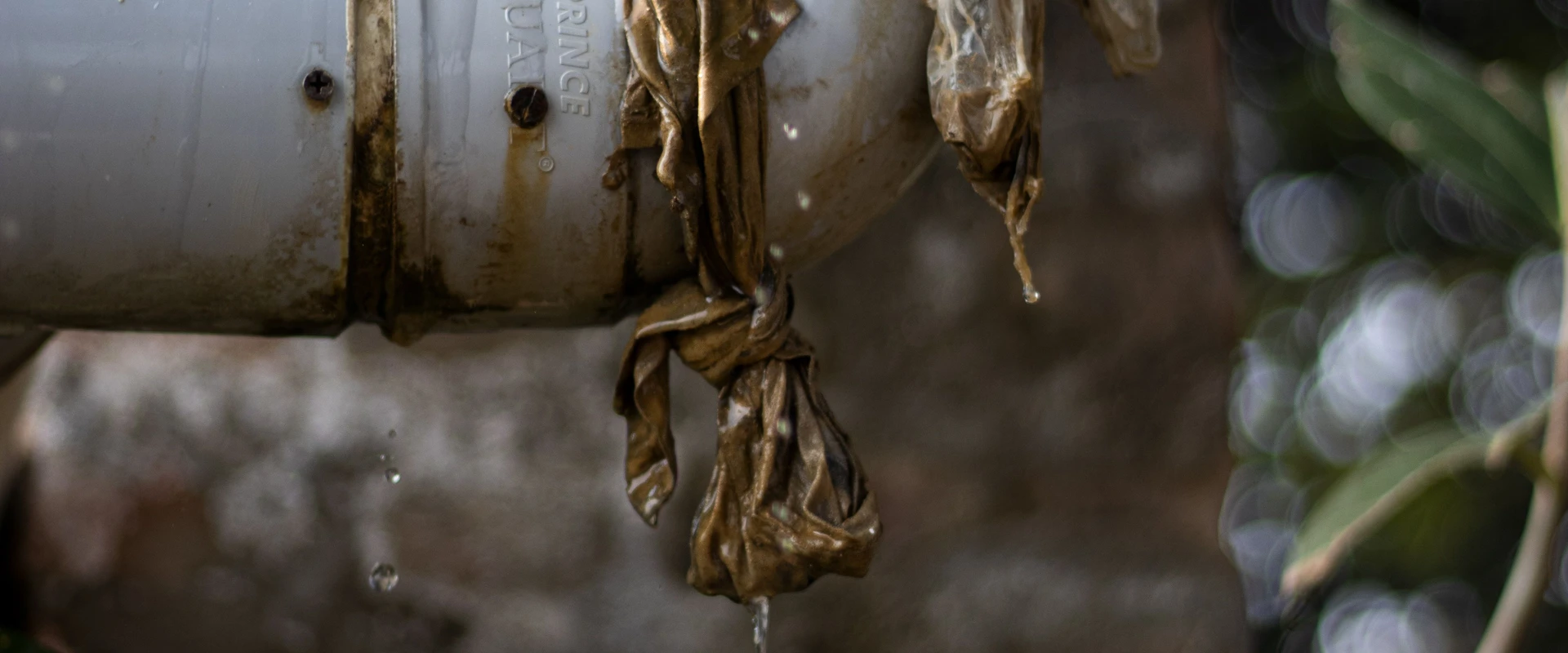
What the water service line is
The water service line is the buried pipe that carries drinking water from the utility's meter to your house. It is separate from the plumbing inside the walls. In Cibolo, TX, as anywhere, it runs underground for a stretch of the yard, passes through or under the foundation and connects to the main shutoff valve inside or just outside the house.
Because it is buried, a leak can go on for a long time before anyone sees it. The soil absorbs the water, and the first sign is often a high bill, a patch of grass that stays green in a dry week or a house where the tap pressure has quietly dropped.
The main supply is the first stretch of pipe after the line enters the house, up to the branches that feed the fixtures. When people say the "main water line," they sometimes mean one, sometimes the other, and the plumber will ask which. It matters for who owns the repair.
Signs of a water line problem
Low pressure at every tap
If showers and sinks are all weak at once, the leak or restriction is probably before the branches split, in the main or the service line.
Wet or sunken patch in the yard
Soft ground, a puddle with no rain or a depression along the line from the meter to the house points to a buried leak.
Meter moving with everything off
If the low-flow indicator keeps turning with every tap closed, water is escaping somewhere after the meter.
Cloudy or brown water
Disturbed sediment, rust or a break that lets soil in can colour the water. Run a cold tap for a few minutes and see if it clears.
Hissing or running sound
A pressurized leak makes noise, often loudest near the main valve or where the line enters the house.
No water at all
A closed valve, a failed line, a frozen or broken pipe or a utility outage can all stop the flow. Check the meter box and ask the neighbors.
If several of these appear together, treat it as a leak until the meter test says otherwise. A full test is explained in the steps below.
When no water is an emergency
A house with no water is urgent when you cannot flush, cook or wash, when a baby or an older relative lives there, or when water is visibly pooling and eating into the yard or driveway. Do not wait to see whether it comes back.
Before you call, run the simple checks.
Look at the meter box to see whether the meter is turning, and ask a neighbor whether their water is on. If the whole street is dry, it is a utility problem and the right call is your water utility. If only your house is dry, the cause is on your side and our line is open nights, weekends and holidays. A licensed plumber is dispatched for same-day appointments when available, and we do not promise an arrival time.
Why water lines fail
These are general causes and not a claim about any one Cibolo house. Pipe ages and wears out. Old galvanized steel rusts shut from the inside, and some older homes still have lead service lines that the owner may want replaced. Copper can pit, plastic can crack at a fitting and joints can pull apart.
Ground moves too. Soil shrinks in a dry spell and swells after rain, and a pipe that cannot flex takes the strain at a joint. Tree roots follow moisture and can wrap or press a line. Another cause is damage during digging, such as a fence post hole, a trench for a new irrigation system or a landscaping job that nicked the pipe.
Pressure is the amplifier. A line that holds normal pressure for years can start to weep when pressure climbs after a failed reducing valve. The slow weep then wears a bigger hole as the pressurized water cuts into the pipe and washes out the soil around it.
Finding the leak before anyone digs
The plumber starts with a meter test. With every tap and appliance off, a moving meter dial means water is escaping after the meter. Closing the main shutoff valve then tells you which side the leak is on. If the meter keeps moving with the house valve closed, the leak is between the meter and that valve, which is the service line.
Next the plumber listens. Acoustic equipment, such as ground microphones and a sensor on the line, picks up the sound of pressurized water leaking and narrows the spot to a few feet. Pressure testing a section isolates which stretch holds and which does not. A utility locator maps where the line actually runs, since old lines do not always follow a straight path from meter to house.
Honest limits apply. A very small leak, a plastic pipe that muffles sound or a spot under a slab can be harder to pinpoint, and the plumber says so rather than guessing. You hear that before any ground is opened.
Repair or replace the line
A single clean break in an otherwise sound pipe can usually be repaired by cutting out the damaged section and putting in a new piece with proper fittings. That is the smaller job. If the pipe is corroded along its length, has failed more than once or is made of material the owner wants gone, replacement of the whole line is often the better value, because each repair is another dig.
| Situation | What it usually means | Typical fix |
|---|---|---|
| One break, pipe otherwise sound | An isolated failure from a joint, a rock or digging damage | Dig down, cut out the section and install a new piece |
| Several leaks or pinholes along the line | The pipe is worn out throughout | Replace the full line from meter to house |
| Old galvanized or lead service line | Material the owner may want removed | Replace the line, usually with modern plastic or copper pipe |
| Low pressure with no leak found | Scale or corrosion has narrowed the pipe, or a valve is failing | Clean or replace the section, check the main valve and pressure regulator |
| Line passes under a driveway or patio | Open digging would break hard surfaces | Consider trenchless methods, or reroute the line around the surface |
Trenchless or open-cut, an honest comparison
Open-cut means digging a trench along the line, pulling out the old pipe and laying new pipe. It is the most direct method, it lets the plumber see every inch of the pipe and the soil, and it works almost anywhere. The cost is a torn-up yard, and any driveway, sidewalk or landscaping in the path has to be restored.
Trenchless methods dig only at the two ends. In pipe bursting, a tool pulls a new pipe through the old one and breaks the old one apart as it goes. In pipe lining, a resin liner is cured inside the existing pipe. Both disturb far less of the yard and leave a driveway intact.
Trenchless has limits. The old pipe has to follow a path that a tool can travel, a badly collapsed line may not allow it, and not every plumber or line suits it. It also may not be the cheaper option, because the equipment is specialised. Ask the plumber whether your line can be done without a trench, and what the trade-offs are for your layout.
Water line leaking or no water at the house?
Call the 24/7 line. A licensed plumber is dispatched, and you get a clear price before work starts.
Shutoff valves and who owns what
Two valves matter. The meter valve sits at the meter box and belongs to the utility. Do not turn it yourself, because the utility does not want customers operating its equipment, and a damaged valve can leave a whole connection without water. If you think the meter valve needs to close, call your water utility.
The second is the main shutoff on your side, usually where the line enters the house or at the edge of the foundation. That one is yours. Learn where it is and turn it a few times a year so it does not seize. A round handle turns clockwise to close, and a lever handle turns a quarter turn.
Responsibility for the line itself depends on the utility and where the break is. Often the utility owns up to and including the meter and the homeowner owns the pipe on the house side, but practice differs, so ask your water utility before assuming. Call before repair work starts, not after.
Pressure and the pressure reducing valve
Water mains can run at higher pressure than home plumbing is meant to take. Many houses have a pressure reducing valve, a bell-shaped brass fitting near the main shutoff, that drops incoming pressure to a safer working level. Over time its internal parts wear, and the valve can fail in either direction.
A failed valve that lets full street pressure through can stress every fitting in the house, shorten the life of the water heater and washing machine hoses and make faucets and toilets act up. Banging pipes, a relief valve that drips on the water heater or repeated leaks at fittings point toward high pressure. A plumber puts a gauge on a hose bib to read the actual pressure, then decides whether the valve can be adjusted or needs replacing.
If the pressure is low instead, the plumber checks the valve, the main shutoff and the line itself for scale, a partly closed valve or a leak.
What affects the price of water line work
Length and depth
A short, shallow line costs less to repair than a long run buried deep or one that crosses the whole lot.
Homeowners policies usually cover sudden and accidental damage, but not a leak caused by age, wear or corrosion. Some policies add a separate service line endorsement. Ask your insurer. You get a clear price before work starts.
Before the plumber arrives
Close the house main
Turn the shutoff on your side clockwise. Leave the meter valve alone and call the utility if that is the only valve that will close.
Read the meter
Write down the register number, wait 15 minutes with everything off and read it again. Tell the dispatcher what you saw.
Call before you dig
Buried gas, electric and communication lines can be near the water line. Do not dig to find it yourself, and ask the plumber or your utility about having buried lines marked.
Clear the path
Move vehicles, bins and anything that blocks the meter, the main valve or the yard where the line runs.
Your water line in Cibolo, TX
Two water providers serve Cibolo, the City of Cibolo and Green Valley Special Utility District. Which one serves your house depends on the address, and the name on your bill tells you. That matters here because the utility is who you call about the meter, about low pressure on the street and about where its responsibility ends. A plumber handles the house side.
If you are a City customer, the Utility Billing Office can be reached at 210-658-9900, extension 3131. For GVSUD, the main line is (830) 914-2330. The City also offers a leak adjustment after a repair, which discounts the consumption charge when usage returns to normal, and it asks for the repair receipts. Keep the plumber's invoice.
The City of Cibolo enforces the 2021 International Plumbing Code (IPC). Permit rules vary, so ask the City of Cibolo building department before replacing a line. If a new line, valve or pressure fitting is needed as part of a larger job, the plumbing installation page covers planned work. We also serve Selma, and the process is the same there.
Common questions about water line repair
Calls about the pipe between the meter and your house are answered all night and all weekend, and a licensed plumber is dispatched with same-day appointments when available. No arrival time is promised, so use the wait to find your house main valve, often where the pipe enters the home or in a box near the street.
Tell the dispatcher whether the City of Cibolo or Green Valley Special Utility District serves your address. You see a clear price before any digging starts.
It depends on the utility and where the break is. Many utilities handle the line up to the meter and the owner handles the rest, but ask your water utility before repairs. The name on your bill tells you whether that is the City or GVSUD. A plumber can locate the leak and give you a price first.
Leave the meter valve to the utility. It is their equipment. Use the main shutoff on your house side, and call the utility if you need the meter itself closed.
It might be. Run the meter test with everything off, and if the meter moves, the leak could be the service line or the plumbing inside. For a leak inside the house, see burst pipe repair.
It depends on length, depth, soil, surface restoration and whether the plumber digs or uses a trenchless method. The plumber can describe the work and the expected steps once the line has been located.
Buried utility lines can be near a water line, so do not dig on your own. Ask the plumber or your utility about having buried lines marked before any digging, and let the plumber explain the steps before the ground is opened.