
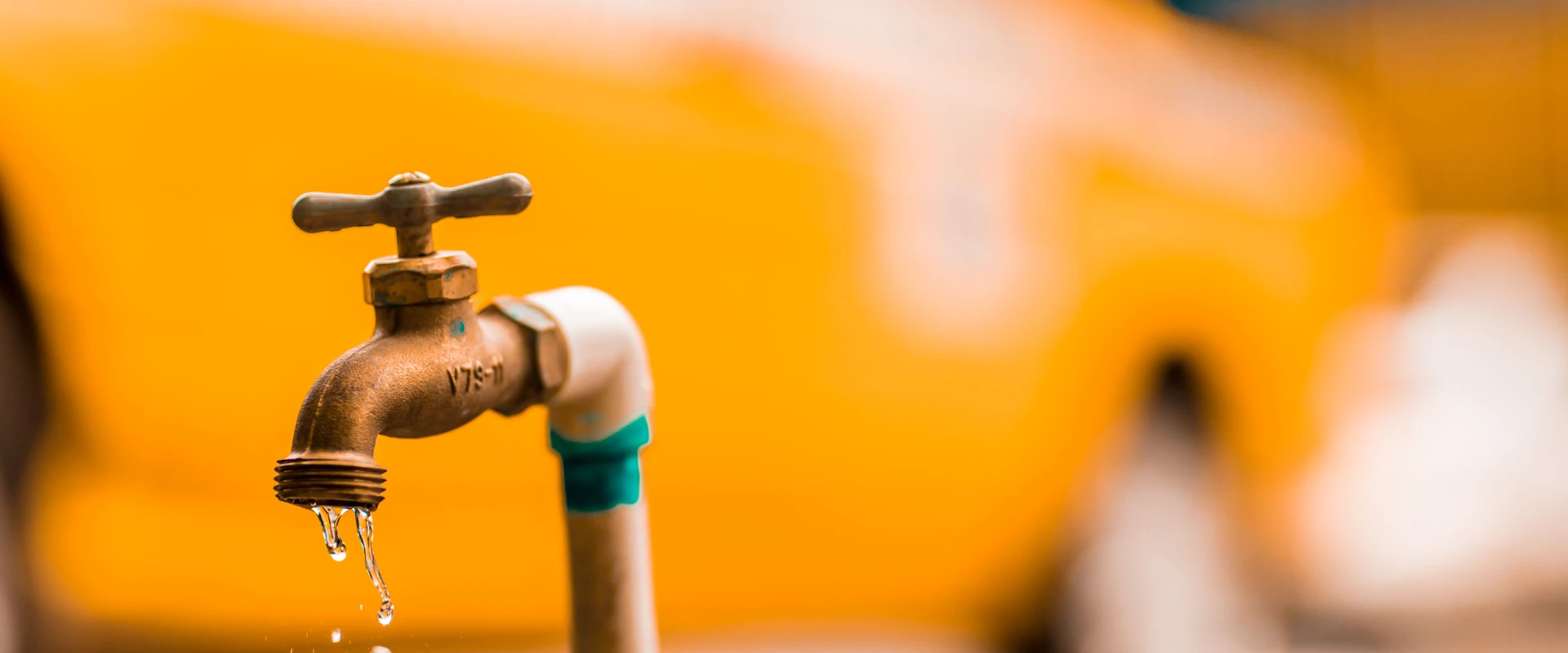
When a faucet will not shut off, do this first
Start under the sink. Almost every kitchen and bathroom faucet has two small shutoff valves on the supply lines, one for hot and one for cold. Turning each one clockwise stops the water to that faucet only. These are called angle stops, and they let you stop a leak without losing water to the rest of the house.
If the stops are old, they may be stiff, or they may drip from the stem once you turn them. Do not force a valve that will not move, because a stuck stop can snap its stem. Go to the main water valve instead, usually near the street side of the lot or where the line enters the house, and turn it clockwise until it stops.
Then open a tap at the lowest point in the house to drain the pressure. This is the moment to call. A burst braided supply line can put out several gallons a minute, and the damage to cabinet floors and flooring grows fast, so the line is open nights, weekends and holidays for exactly this.
Faucet repair in Cibolo, TX and what it covers
Faucet repair in Cibolo, TX covers any fixture where water is released by a handle, including kitchen, bathroom, bathtub, laundry and outdoor faucets. It also covers the parts that feed them, such as shutoff valves, supply lines and the valves behind a washing machine. A faucet is a simple machine with one job, which is to open and close a path for water, and nearly every problem comes from the part that does the sealing.
Our work includes replacing cartridges, seats, springs, O-rings and washers, swapping a worn faucet for a new one, and replacing the stops and supply lines under the sink. Landlords and property managers often deal with the under-sink valve, because it is the part that leaks after years of never being touched.
We do not repair every brand. Matching parts for some luxury and foreign-made faucets can mean waiting days or weeks for a special order, and a few lines are no longer made. When that happens, the plumber tells you before work begins so you can choose between waiting and a replacement faucet.
The four faucet types and what leaks from each
How a faucet leaks depends on how it seals. Knowing the type narrows the repair before anyone opens the handle. If the handle moves up and down and side to side, it is almost certainly not a compression type.
| Faucet type | How it seals | What usually goes wrong |
|---|---|---|
| Compression | Two handles press a rubber washer against a seat | Washer hardens or the seat pits, so the spout drips |
| Cartridge | A single sleeve slides inside the body | O-rings wear and water seeps at the base or the spout |
| Ball | A slotted ball with rubber seats and springs | Seats and springs weaken, causing drips and base leaks |
| Ceramic disc | Two polished discs slide against each other | Mineral grit or a worn seal causes drips or stiff handles |
Compression faucets are the oldest design and the easiest to rebuild. Cartridge and ceramic disc faucets are common in newer homes, and the usual fix is a new cartridge or disc assembly. A ball faucet has the most small parts, which is why it is often replaced instead of rebuilt.
No hardness figure appears in the 2025 reports we have seen, so a guess about mineral buildup is only a guess. If you see white crust around the aerator or base, that is mineral buildup from your own tap, and a water test tells you more than a guess.
Where the water is showing up
The location of the drip points to the failed part. A dripping spout when the handle is off means the sealing part inside has worn. Water at the base of the spout or around the handle means an O-ring or packing nut has failed. Water in the cabinet below means a supply line, a stop valve or the drain, and it is worth checking before you assume the faucet is at fault.
Low flow is its own category. If one sink runs weakly, the aerator at the spout tip is the first suspect, since debris from a repair or a water main flush can clog its screen. If it is still weak with the aerator removed, a worn cartridge or a partly closed stop valve is next.
- Spout drips with the handle off. Internal washer, seat or cartridge.
- Leak at the handle or spout base. O-ring or packing.
- Wet cabinet floor. Supply line, stop valve or drain connection.
- Weak flow at one fixture only. Aerator, cartridge or stop.
- Hot only or cold only. A failed cartridge or a stop that is partly closed.
Repair or replace the faucet
Repair is usually the better choice when the faucet is in good shape and the part is easy to find. A cartridge swap on a mid-life faucet costs a fraction of a new one, and the finish and fit stay the same. Replacement makes more sense when the body is corroded, the finish is flaking, or parts for that model are hard to get.
Age matters in a general way. A faucet that has run for 15 or 20 years may still work, but each repair buys less time once the body itself starts to wear. A rental house that sees tenants come and go may be better served by a standard, easy-to-stock faucet than by an exotic fixture whose parts take weeks to order.
When a faucet is replaced, a plumber also swaps the supply lines and checks the stops, since a new faucet on a tired supply is a repeat leak waiting to happen. For a bigger fixture change, see the work covered under plumbing installation.
Faucet gushing or valve stuck open?
Call the 24/7 line. A licensed plumber is sent out and you hear the price before work starts.
Kitchen, bathroom, tub and outdoor faucets
Kitchen faucets work harder than any others, with sprayers, pull-down hoses and a lot of use, so the hose and its connections are common leak points. Bathroom sinks are simpler, but the pop-up drain linkage below the sink can mimic a faucet leak. A bathtub spout often leaks because the diverter inside it wears, which sends water out of the tub spout while the shower runs.
Outdoor spigots, also called hose bibs, fail differently. A drip from the handle is a worn packing, while water that appears inside the wall when the spigot is on points to a split behind it. Freezing weather can crack a spigot, so disconnecting hoses and covering the spigot before a hard freeze is a sound general habit.
A valve behind a washing machine is another place for slow leaks. The small boxed valves and rubber hoses get little attention, so it is worth checking them for drips or stains while the machine is pulled out.
Shower valve leaks, in short
A shower valve sits behind the wall, so the handle trim you see is only the front of it. A leak shows up as dripping from the showerhead after shutoff, hot and cold mixing, or a stain on the other side of the wall. Changing a cartridge may be possible from the front, but a body that is cracked or corroded needs access through the wall.
That is a repair we explain before any tile is cut, since the price depends on the wall behind it. If the stain is spreading and you suspect a pipe rather than a valve, electronic leak detection can narrow it down without opening the wall first.
What affects the price of faucet repair
Type and brand
Common faucets have stocked parts. Specialty or imported models can need a special order.
Insurance is worth one call. Homeowners policies usually cover sudden and accidental water damage, such as a burst supply line, but not a faucet that wore out or a leak that went on for months. Ask your insurer before you assume either way. You get a clear price before work starts, and any change after the plumber opens the fixture is explained first.
Before the plumber arrives
Close the stop or the main
Turn the stop valve under the sink clockwise. If it will not move, close the main water valve.
Dry and protect the area
Pull cleaning supplies out of the cabinet and put a towel or bowl under the leak.
Keep power away from water
If water is near an outlet or a small appliance, unplug it only if the floor around it is dry.
Note the type and symptom
Write down the faucet brand if it shows, and where the water appears and when.
Faucet repair and the water you pay for in Cibolo
A dripping faucet adds to the bill every hour. According to the City of Cibolo, the My Water Advisor portal shows a leak icon when the meter has not idled for 3 consecutive hours in a 24 hour period. A running fixture or leak that never lets the meter idle can trigger it, which is one more reason to repair it. That is a reason to repair a slow drip rather than ignore it.
If your water comes from Green Valley Special Utility District instead of the City, check the name on your bill, and ask GVSUD what tools it offers. After a repair the City may apply a leak adjustment to the consumption charge, so keep the plumber's invoice as proof.
For a house in Schertz or nearby towns such as Selma, the steps under the sink are the same, and so is the 24/7 line.
Common questions about faucet repair
A faucet that drips all night or will not shut off can be reported at any hour, weekends too, and a licensed plumber is dispatched with same-day appointments when available. There is no arrival time to quote, but the dispatcher will ask about the brand and whether the handle, spout or base is leaking.
If it will not shut off, close the small valves under the sink by turning them clockwise until snug. You hear a clear price before a cartridge or washer is touched.
Close the stop valve under that sink by turning it clockwise. If it will not turn, close the main water valve and call. Do not force a stiff stop, since the stem can break.
Repair is usually cheaper if the faucet is in good shape and parts are easy to find. Replacement makes more sense for a corroded body or a model whose parts are hard to get. The plumber compares both, and you decide with the price in hand.
The aerator at the spout tip is the first thing to check, since debris clogs its screen. If flow is still weak, the cartridge or the stop valve may be the cause, which a plumber can test quickly. Leaks from a hidden pipe are a separate matter handled under leak detection.
Sometimes through the trim, if the cartridge is the problem. A cracked valve body needs access behind the wall, and the plumber explains that and the price before any tile is cut.
Often yes, but matching parts can mean waiting for a special order. If a part is not available, the plumber tells you before work begins so you can choose between waiting and replacing the faucet.