
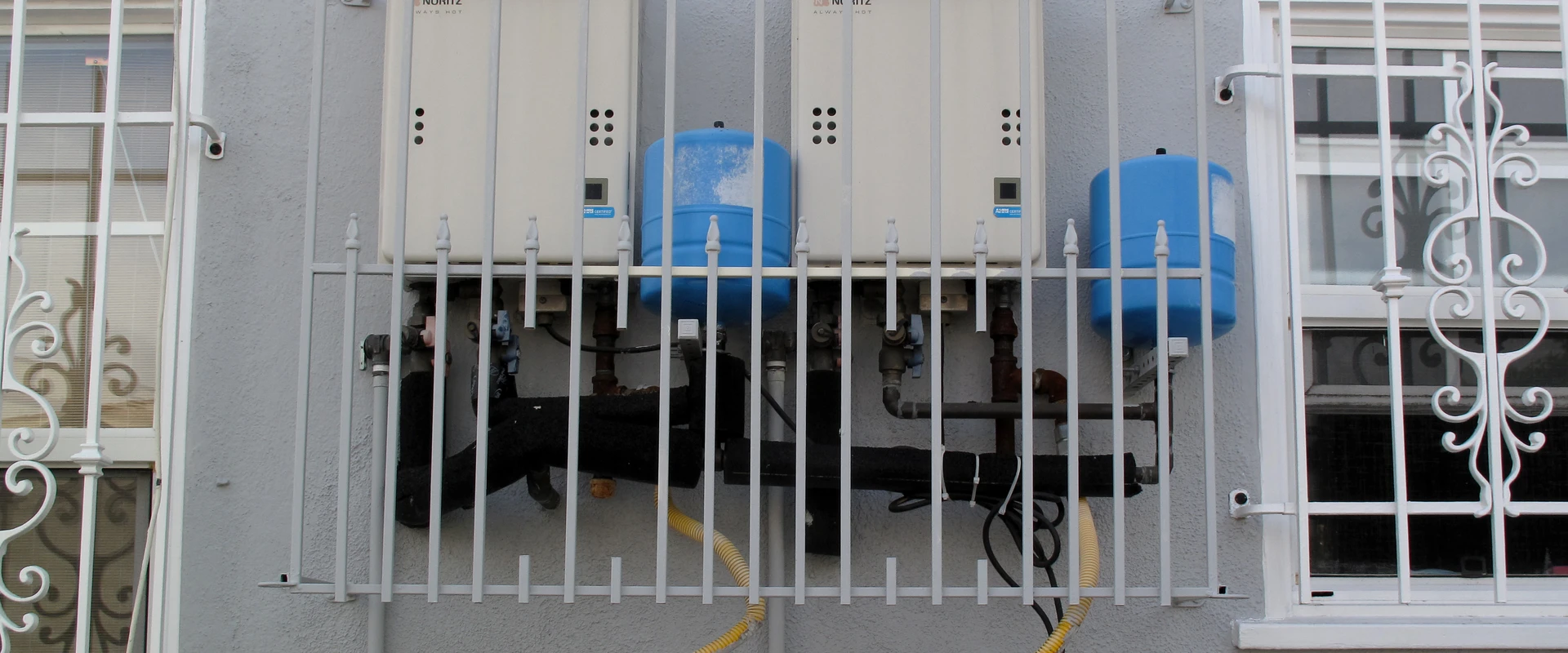
How a tankless water heater works
A tankless heater has no storage tank. When a hot tap opens, a flow sensor feels water moving through the unit and tells the heater to start. In a gas unit, a burner lights and heats a metal heat exchanger. In an electric unit, heating elements switch on. The cold water passes through, picks up the heat, and leaves hot.
A control board watches the temperature of the water going in and out and adjusts the flame or power to hold the set temperature. When the tap closes, the flow stops and the heater shuts off. It does not burn fuel or draw power while no water is moving, apart from the electronics, which is the main source of savings compared with a tank.
That also explains the limits. The unit can heat only so much water per minute to a given temperature. Ask for more than it can deliver and the water gets cooler, which is why sizing matters more than with a tank.
Sizing by flow rate and temperature rise
Tankless units are sized by gallons per minute (GPM) and by temperature rise. Temperature rise is the difference between the cold water coming in and the temperature you want out. The cooler your incoming water, the harder the unit has to work, and the less flow it can deliver at that rise.
The method is simple. List the fixtures that could run at the same time, such as a shower, a kitchen faucet and a dishwasher. Add their flow rates. Then compare the total to the unit's rated flow at your temperature rise. If two showers and a washer might run together, the unit needs to cover that total.
We do not know your incoming water temperature from published local figures, so it is something to estimate with the plumber. Households that run many fixtures at once may use two smaller units or choose a larger one. A short sizing call with the dispatcher gets the right plumber sent out to measure instead of guess.
| Step | What to do | Why it matters |
|---|---|---|
| List fixtures | Write down showers, faucets, dishwasher and washer | These decide the peak flow |
| Pick the likely overlap | Which ones run at the same time | Add only those, not every fixture |
| Find the temperature rise | Desired temperature minus incoming water | A bigger rise lowers the flow the unit can supply |
| Compare to the rating | Check the unit's GPM at that rise | A unit that is too small gives lukewarm water |
| Allow for growth | Think about added bathrooms or guests | Replacing a small unit later costs more |
Gas line and venting for tankless
Gas tankless units burn more fuel at once than a tank, so the gas line often has to be larger. A line that fed a 40 gallon tank may be too small for a tankless unit that fires at a much higher rate. The plumber measures the run, adds up the other gas appliances and checks the sizing against the unit's manual.
Venting is different too. Many tankless units are high efficiency and make cool exhaust that needs special vent pipe, such as stainless steel or polypropylene, and sometimes a condensate drain. Always check the unit's manual, because the right vent material, length and termination are set by the manufacturer.
Gas work needs a licensed plumber. Do not attempt a gas line change yourself. If you ever smell gas, leave the building, then call 911 and the gas utility from a safe distance. The City of Cibolo enforces the 2021 International Plumbing Code (IPC), and permit rules vary, so ask the City of Cibolo building department about your job.
Electric tankless and the load on your panel
An electric tankless unit draws a very large load for a few seconds at a time. It usually needs one or more dedicated large circuits and heavy wire, and an older panel may not have the room. That can turn a simple swap into an electrical upgrade.
Wiring is electrical work, and we do not do it. A plumber handles the water side and an electrician handles the circuits. Check the unit's label for its amp draw and compare it with your panel before you buy.
In many homes, a gas unit or a tank heater avoids this problem. Electric tankless units suit small loads such as a bathroom or a point-of-use spot, though whole-house electric units exist for homes with the electrical capacity.
Want to know if tankless fits your home?
Call the line and describe the fixtures and the fuel. You hear the price before work starts.
Scale, descaling and flushing
Minerals in water can build up as scale on the heat exchanger. Scale acts like insulation, so the unit has to work harder, makes noise, runs hot and eventually throws error codes. A tankless unit has narrow passages, so even a thin layer of scale matters more than in a tank.
The fix is a flush. The plumber connects a small pump and hoses to service valves, called isolation valves, on the unit, and circulates a descaling solution for a set time. White vinegar is often mentioned as a general-knowledge option, but the manufacturer's manual names the approved solution and the steps. Follow the manual.
How often to flush depends on the water and the unit. No hardness figure appears in the 2025 reports we have seen, so we do not state one. You can test your tap with a simple kit, and your water utility publishes an annual water quality report that you can ask for. Between the test and the manual, you can set a schedule. If your unit has no isolation valves, the plumber can add them during a service call.
Error codes and no hot water
Tankless units show a code on a display when something is off. Codes differ by brand, so the manual is the key.
The common faults fall into groups. An ignition fault means the burner did not light, which can come from gas supply, a dirty igniter or a vent problem. A flame rod fault means the unit cannot sense the flame. A flow sensor fault means the unit does not feel enough water moving. A condensate fault means the drain for a high efficiency unit is blocked.
Before calling, check the simple things. Make sure the gas valve is open, the power is on, and the vent is clear. Then check for a clogged inlet screen or a closed isolation valve. If the code returns, a plumber can read it and test the part.
A plumber can also tell you if the unit needs a flush, a part, or replacement. Fixing a faulty unit is covered under water heater repair, and the choice to replace is explained on the water heater replacement page.
The cold water sandwich and minimum flow
A tankless heater needs a minimum flow of water to fire, often around half a gallon per minute, though the exact number is in the manual. If you open a tap just a little, the unit may not start, or may start and stop. This is the minimum flow issue.
The cold water sandwich is a related effect. If you use hot water, shut off the tap briefly and then reopen it, the hot water in the pipe has cooled and you get a slug of cold before the heat returns. Long pipe runs between the heater and the tap make this worse.
Fixes include a recirculation line, a small buffer tank or moving the heater closer to the fixtures. A plumber can tell you what fits the layout of your house.
Tankless or tank, the honest trade-offs
Tankless units give hot water on demand and take less space. They can last longer than a tank, with general trade guidance of around 15 to 20 years or more with regular flushing, compared with roughly 8 to 12 years for a tank. They also use no fuel while idle.
The costs are real. The unit costs more upfront, the gas line, vent or electrical work can add to it, and the unit needs routine flushing. A tank is simpler, cheaper to buy and easier to repair, though it stores hot water that cools and can run out. If your household uses small amounts at different times, a tank may suit you. If you run many fixtures, a tankless unit may suit you better.
Planned installs of all types are covered on the water heater installation page, and the plumber can compare the two for your house.
What affects the price of a tankless job
Unit size and type
Higher flow and gas models cost more, and so do condensing models.
Insurers usually cover sudden and accidental water damage, not wear or scale. Ask your insurer before you assume either way. You get a clear price before work starts.
Before the plumber arrives
Find the unit and the manual
Know the model, and keep the manual and any error code ready.
Check the basics
Confirm the gas valve is open, the power is on and the display has no message.
List your fixtures
Note the showers, tubs, dishwashers and washers that run together.
Clear the area
Make space around the unit and the isolation valves.
Tankless water heaters in Cibolo
Two water providers serve Cibolo, the City of Cibolo and Green Valley Special Utility District, and which one serves you depends on your address. That matters for tankless units because scale depends on your water. Ask your own provider for its annual water quality report, and test your tap.
The same sizing and flushing steps apply in Schertz, Selma and Universal City. If scale is a repeating problem, a water treatment system can be discussed with the plumber.
Common questions about tankless water heaters
List the fixtures that run together, add their flow rates in gallons per minute, and compare the total to the unit's rating at your temperature rise. The plumber can do the math and check the result.
Often yes. It burns fuel faster than a tank, so the gas line may need to be larger, and the vent is usually special. Gas work needs a licensed plumber.
It depends on your water and the manual. Ask the manufacturer, and test your tap, since no hardness figure appears in the 2025 reports we have seen.
That is the cold water sandwich, caused by cooled water in the pipe. A recirculation line or a closer unit helps. If the unit is also shutting off, a plumber can test it.
It depends on the household. Tankless gives hot water on demand and lasts longer, but costs more upfront and needs flushing. A tank is simpler.
Ask the dispatcher about your brand and model. We do not repair every brand.