
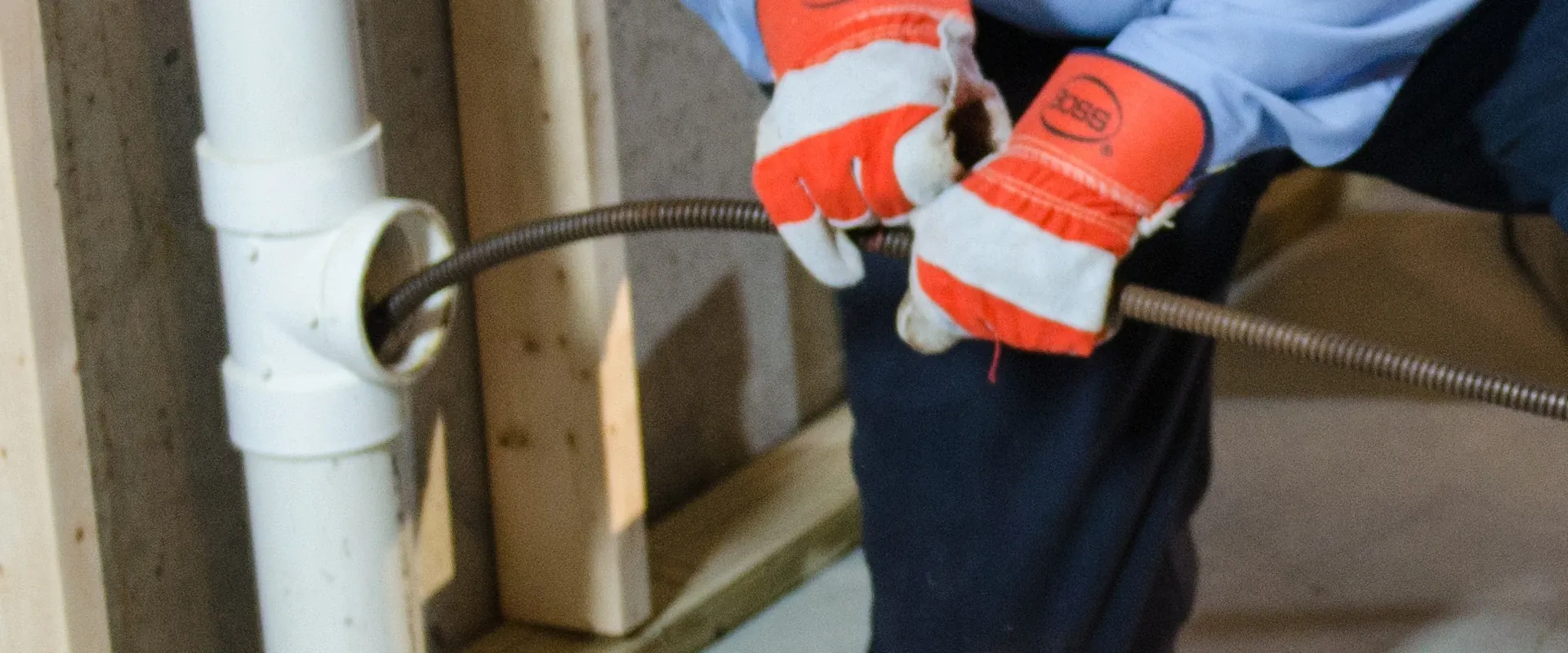
What drain cleaning actually does in Cibolo, TX
Drain cleaning is the removal of a blockage from a fixture drain, a branch line or the main line. The plumber uses a hand auger, a motorized cable or high pressure water, then runs a flow test to prove the pipe is open. It is different from a plunger fix, because a plunger moves a clog back and forth while a cable or jet breaks it apart or pulls it out.
Most home drains are small. A kitchen sink drain is usually 1.5 inches across, a tub or shower drain 1.5 to 2 inches, a toilet drain about 3 inches and the main sewer line commonly 4 inches. The smaller the pipe, the less buildup it takes to close it, which is why a kitchen sink stops long before a main line does.
A clog also has a cause. Grease that cooled in a trap, hair wound around a pop-up stopper, wipes that never broke down and tree roots in an old clay line all look like "a slow drain" from the sink. They need different tools, so the first job is working out which one you have.
Where the clog is, based on what backs up
The pattern of what is slow or gurgling points to the location of the clog before anyone picks up a tool. One slow fixture means a clog in that fixture's own branch. Several fixtures on the same floor mean the branch they share. Every drain in the house, or a floor drain bubbling when you flush, means the main line.
| What you notice | What it usually means | Typical fix |
|---|---|---|
| One bathroom sink drains slowly | Hair and soap film in the trap or tailpiece | Remove the stopper, hand auger the branch |
| Kitchen sink and dishwasher both back up | Grease or food packed in the kitchen branch or disposal outlet | Cable the branch, then flush with hot water |
| Toilet gurgles when the shower drains | A partial clog in the shared branch or main vent path | Cable the branch, check the vent if gurgling continues |
| Tub fills with water when the washer drains | The main line is restricted | Drum machine on the main, camera check |
| Every drain backs up and a floor drain overflows | A full main line blockage | Cable or hydro jet the main, inspect with a camera |
If your own diagnosis lands in the bottom two rows, treat it as urgent. Water has nowhere to go but out of the lowest opening in the house, which is usually a shower, tub or floor drain. A plumber can also confirm whether the blockage is in your line or further downstream, and main line work is explained under cleaning the sewer line.
When a clogged drain is an emergency
Call right away if sewage is coming up in a tub, shower or floor drain, if a toilet will not flush and the bowl is rising, or if water is spreading across a finished floor. These are the situations where waiting until morning costs flooring, drywall and cabinet bases. Our line is open nights, weekends and holidays, and a licensed plumber is dispatched for same-day appointments when available.
A single slow sink with no overflow can usually wait for a daytime visit, but it still helps to call. Describe which fixtures are affected and the dispatcher can tell you whether to keep using the bathroom or stay off the water until help arrives.
Drain stopped and water rising?
Call the 24/7 line and describe what is backing up. You get a clear price before work starts.
Kitchen sinks: why they clog again
Kitchen drains are the repeat offenders. Cooking fat leaves the pan as a liquid, cools inside the trap and the horizontal branch, and coats the pipe wall in a layer that catches coffee grounds, rice and food scraps. The clog grows from the walls inward, so the drain slows for weeks before it stops.
A hand auger or cable removes the plug, but it often leaves the greasy wall layer behind. If the same sink clogs every few months, a high pressure water jet can scour the pipe wall so the buildup does not restart so quickly. The hydro jetting page explains how that works and when it is worth the cost.
Garbage disposals add a second problem. A disposal grinds food into small pieces, but it does not dissolve them, so starch, coffee grounds and eggshell can settle in the outlet pipe. A jammed or humming disposal is a different repair, covered on the disposal repair page.
How a plumber clears the line
A typical visit follows a fixed order. The plumber confirms which fixtures are affected, removes and inspects the trap where that is possible and then chooses the method. A small sink machine with a thin cable handles most sink and tub branches. A heavier drum machine with a larger cable reaches the main line through a cleanout, and a camera confirms what the cable hit.
Cutting heads are matched to the blockage. A spear or drop head punctures a soft plug, a blade or chain head scrapes grease off the wall and a root cutter shears roots in clay or older cast iron. After the pipe is open, the plumber runs water for several minutes to confirm it drains freely, because a pipe can pass a quick test and still be half full of debris.
Honest limits matter here. A cable cannot repair a collapsed or offset pipe, and clearing roots without fixing the break only buys time. If the camera shows a broken section, the next step is a repair, described on the sewer line repair page, and you decide with the price in hand.
What should never go down a drain
Wipes are the biggest cause of main line clogs, including wipes labeled flushable. They do not break up the way toilet paper does, and they snag on rough joints and roots. Grease, coffee grounds, rice, pasta and produce stickers belong in the trash. In bathrooms, hair is the main culprit, followed by cotton swabs and dental floss.
Chemical drain cleaners deserve a plain warning. Caustic products can sit in a fully blocked pipe for hours, which can soften old pipe and joints and turns the standing water into a splash hazard when a plumber opens the line. If you already used one, tell the dispatcher so the plumber wears the right protection.
What affects the price of drain cleaning
Which line is blocked
A sink branch is shorter and easier to reach than a main line, which may need a larger machine and a cleanout.
Insurance is worth a call. Many homeowners policies cover sudden and accidental water damage but not a clog caused by buildup or wear, and sewer backup is often a separate endorsement. Ask your insurer before you assume either way. You get a clear price before work starts, and if the answer is different once the plumber sees the line, you hear that before anything else is done.
What to do before the plumber arrives
Stop adding water
Do not run the dishwasher, washer or sinks, and avoid flushing while the line is blocked.
Protect the floor
Put towels around a backing-up tub, shower or floor drain and move rugs and boxes out of the way.
Clear access
Make the way to the cleanout, the affected bathroom or the kitchen sink cabinet open.
Skip the chemicals
Do not pour drain cleaner into a standing clog, and mention it if you already did.
Drains and the sewer in Cibolo
Sewer billing in Cibolo changed in November 2025. According to the City, it no longer bills sewer, and Green Valley Special Utility District (GVSUD) adds the sewer charge. That matters in practice because a blockage that backs up every drain at once may be in your own line or in the public sewer main in the street. GVSUD lists an emergency line for suspected sewer clogs at (830) 914-2331.
If a neighbor has the same symptoms, or the manhole near your home is overflowing, call the utility first. If only your home is affected, a plumber can use a camera and the cleanout to tell which side of the property line the clog is on. Either way, the question to settle first is who owns the pipe, because that decides who pays for the fix.
The City of Cibolo enforces the 2021 International Plumbing Code (IPC), which sets how traps, vents and cleanouts are installed. A repair that changes the drain layout should follow it, and permit rules vary, so ask the City of Cibolo building department before work that opens walls or floors.
We also take drain calls in nearby towns, including Schertz and Converse, and the steps above are the same there.
Common questions about drain cleaning
Our line is staffed at midnight on a Sunday the same as at noon on a Tuesday, and a licensed plumber is sent out with same-day appointments when available. The dispatcher will not name an arrival time, but will ask about the clog so the plumber knows what to bring.
While you wait, hold off on the dishwasher and washing machine so water does not back up through the lowest drain in the house. You get a clear price before any cable goes into the pipe.
It is better not to. Caustic cleaners rarely clear a full blockage, they can damage old pipe and fittings and they leave dangerous standing water for the person who opens the line. A plunger and a hand auger are safer first steps for a single fixture.
Usually because grease and food scraps coat the pipe wall and keep catching new debris. A cable opens the pipe, but the coating stays. If it comes back within months, ask whether jetting the line would clean the pipe wall for good, as described under hydro jetting.
If every drain in the house backs up together, the main line is involved. If neighbors are affected too, or sewage is rising in the street, call GVSUD at (830) 914-2331. A plumber can also check with a camera, and a full sewer camera inspection shows the condition of the line.
Usually the clog itself is not, because insurers treat buildup as maintenance. Some policies cover sudden water damage that follows, and sewer backup often needs an endorsement. Check your policy or ask your agent.
Yes. We dispatch to Schertz, Selma, Universal City and Converse as well. See Selma or Universal City for the ZIP codes we cover in each.