
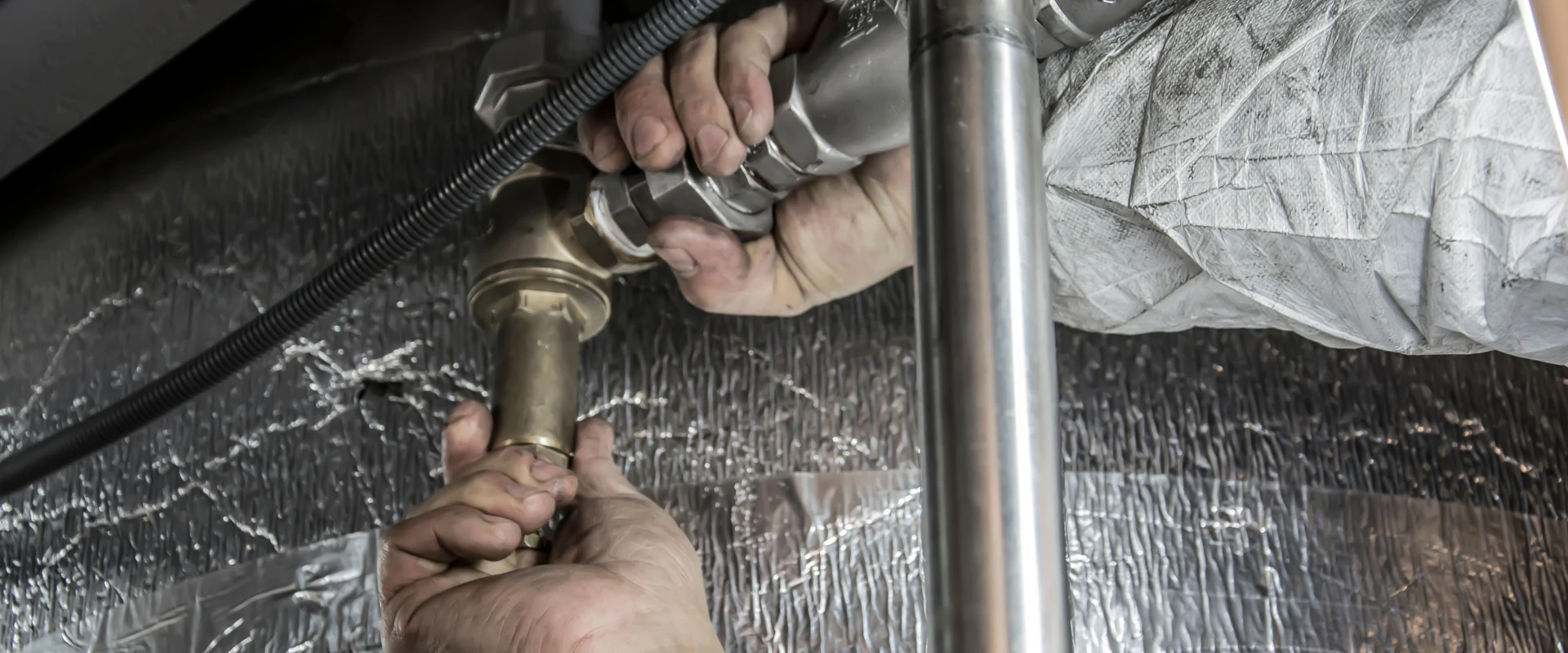
Signs the water pipes in your house may be failing
A water pipe rarely fails without warning. The signs build up over months, and they tend to show in more than one place at once. One sign alone is a reason to look. Several together are a reason to think about replacing pipe.
Brown or rust-colored water
Iron pipe corroding inside. It often shows first after the water has sat unused overnight.
Low pressure at every fixture
Mineral scale or rust narrowing old pipe from the inside, so less water passes.
Repeated pinhole leaks
Small leaks that keep appearing in new spots usually mean the pipe wall is thinning everywhere, not just in one place.
Green or white crust on fittings
Corrosion on copper or brass joints, a sign of chemical attack or age.
Flaking or rough pipe
Galvanized steel that is shedding rust and scale where you can see it, in a garage, basement or attic.
Metallic taste or smell
Corroding metal giving the water an off taste, which needs a plumber to confirm the source.
Not every one of these means the pipes are bad. Rusty water that clears after a minute of running can be a water heater problem. Low pressure at one fixture is usually a clogged aerator or valve, not a pipe. The plumber checks the cheaper causes first.
When a repipe is not needed
One leak does not mean a repipe. A fitting that failed, a supply line that came loose or a single pinhole in an otherwise healthy line is a repair. Replacing a few feet of pipe costs far less than opening every wall in the house.
That matters in Cibolo. According to the U.S. Census, the city grew from 3,035 people in 2000 to 32,276 in 2020, so much of the housing is relatively recent. That still does not tell anyone what is inside your walls, so ask the plumber to look at your actual pipe. We dispatch to nearby towns as well, including Selma.
We do not know the pipe type in any given Cibolo home. The plumber looks at yours, and the choice between repair and replacement follows what is in the walls.
Pipe materials that tend to cause trouble
General trade knowledge helps here, though it is not a statement about any Cibolo house. Galvanized steel was common in homes built decades ago, and over time it rusts from the inside and narrows. Polybutylene, a gray plastic pipe used in some homes from roughly the late 1970s through the mid 1990s, has a record of failing at its fittings, and many plumbers recommend replacing it.
Copper lasts a long time, but it can develop pinholes where the water is aggressive or where the pipe has been stressed. Early CPVC can turn brittle with age and heat, especially near a water heater. Neither is a reason to panic. They are reasons for a plumber to look when leaks start.
If you are unsure what your pipes are, look where they are exposed, such as at the water heater, under a sink or in the garage, and describe the color and finish to the dispatcher.
PEX, copper and CPVC compared
Three materials cover most residential repipes. Each has trade-offs, and the right one depends on the house, the budget and how much wall has to be opened.
| Material | Strengths | Trade-offs |
|---|---|---|
| PEX | Flexible, so it bends around corners with fewer joints and often means less wall cut open | Not for outdoor use in sunlight, and some people prefer metal |
| Copper | Long record of service, tolerates heat and lasts for decades | Higher material cost, more joints and more labor to solder |
| CPVC | Rigid plastic, low cost and resistant to many corroding waters | Can become brittle with age, and joints need careful solvent welding |
A plumber who sells one material for every job is not giving you a choice. Ask why a material suits your house, and ask whether the building code in your area allows it.
Whole house, partial or one line
A whole-house repipe replaces the supply lines to every fixture. It makes sense when the pipe is failing in many places or is a known problem material. It is the most disruptive and the most expensive option.
A partial repipe replaces one branch, such as the kitchen and the hall bath, or one floor. It suits a house where part of the system is bad and part is fine. A single-line reroute replaces just one failing run, for example when a pipe under a slab has leaked and the plumber routes a new line through the attic or wall instead of digging up the floor.
Ask the plumber to explain what the rest of the system looks like. A new section joined to old galvanized can leave the old part to fail next, so the plan should say what happens to it.
Wondering if you need a full repipe?
Call the 24/7 line and describe the pipes and the symptoms. A licensed plumber is scheduled, and you get a clear price first.
What the work involves
Repiping is mostly about access. The plumber cuts small access holes in drywall, often at corners, closets and behind fixtures, and runs new pipe through the attic, walls and crawl space. Water to the house is shut off while lines are cut and connected, then restored and tested for leaks before the walls are closed.
Each fixture gets a new connection and the plumber checks pressure and flow. Afterward the access holes need patching. Some plumbers handle basic patching and some do not, so ask, and plan for a drywall and paint trade for finishing.
A repipe where the lines run under a slab is different. Often the old lines are abandoned and new ones are routed overhead, which avoids breaking concrete. Slab work is a separate subject, covered under how slab leaks are repaired.
Living in the house during a repipe
In general terms, you can usually stay in the house, but the water is off for part of each day. How long depends on the house size and the method. Plumbers often work in sections so that some taps come back before the day ends.
Plan for dust, a few open walls and furniture moved away from them. Keep a supply of drinking water and a plan for bathing and the toilet. Ask what the daily schedule will be so you can plan around work and school. Pets and small children should stay clear of open walls and cut pipe.
Ask also about the final day. The water gets flushed out, aerators get cleaned of debris and every fixture is tested before the plumber leaves.
Permits and insurance for repiping
Permits matter for this kind of work. The City of Cibolo enforces the 2021 International Plumbing Code (IPC), and permit rules vary, so ask the City of Cibolo building department before work starts. In other towns the rules are set locally, so ask the city or county where the house sits.
On insurance, be realistic. Homeowners policies usually cover sudden and accidental damage, such as water damage from a burst line, but they generally do not pay to replace pipes that have worn out. Some will cover the leak repair and the damage to the house without covering the pipe itself. Ask your insurer, and ask before work begins if you plan to file a claim, since an adjuster may want to see the failed pipe.
Quotes from several plumbers help, but compare the same scope. One may price only the pipe while another includes access, patching and permit fees.
What affects the price of repiping
Size of the house
More fixtures, more bathrooms and longer runs mean more pipe, joints and labor.
You get a clear price before work starts. If the plumber finds something that changes the plan once a wall is open, you hear about it and agree before more work is done.
Preparing the house for a repipe
Clear the walls
Move furniture, art and shelves away from the walls and closets that will be opened.
Open up the attic
Clear a path to the attic hatch and any crawl space or garage access.
Plan for water
Store drinking water, and decide where everyone will wash while the supply is off.
Protect belongings
Cover floors and remove valuables, and keep pets and young children away from the work area.
Repiping and the age of your home
Much of Cibolo's housing is relatively recent, so the honest first step is for the plumber to look at your actual pipe. Galvanized and polybutylene are general trade knowledge for older homes anywhere, including homes in Schertz and other nearby towns. Age alone does not decide it. The pipe condition does.
If a leak has hit one line, a good first step is to find out whether it is isolated. Electronic listening equipment can often trace one leak to a spot, and a burst section can be handled under fixing a burst section. You can also check your meter. If water moves at the meter with everything off, a leak exists, and a plumber can find where.
Common questions about repiping
Look for several signs together, such as rusty water, low pressure at every fixture and repeated pinhole leaks. A single leak is usually a repair. The plumber checks the pipe type and condition before recommending anything.
Neither is better in every case. PEX is flexible and often needs less opening of walls. Copper has a long service record and tolerates heat. The right choice depends on your house and budget, and the plumber should explain why.
Usually yes, but water is shut off for part of each day and walls are open for a time. Ask for the daily plan so you can arrange water for drinking and bathing.
Often not for worn pipe. Policies usually cover sudden and accidental damage, not wear. Some cover the damage from a burst line but not the pipe itself. Ask your insurer before work starts.
Permit rules vary, so ask the City of Cibolo building department. Outside Cibolo, ask the local city or county. The plumber can tell you what usually applies.
Often it is. A leak at one fitting or one section calls for a repair, not a repipe. If the repairs keep recurring in new places, the pipe wall may be failing and a bigger plan makes sense.