
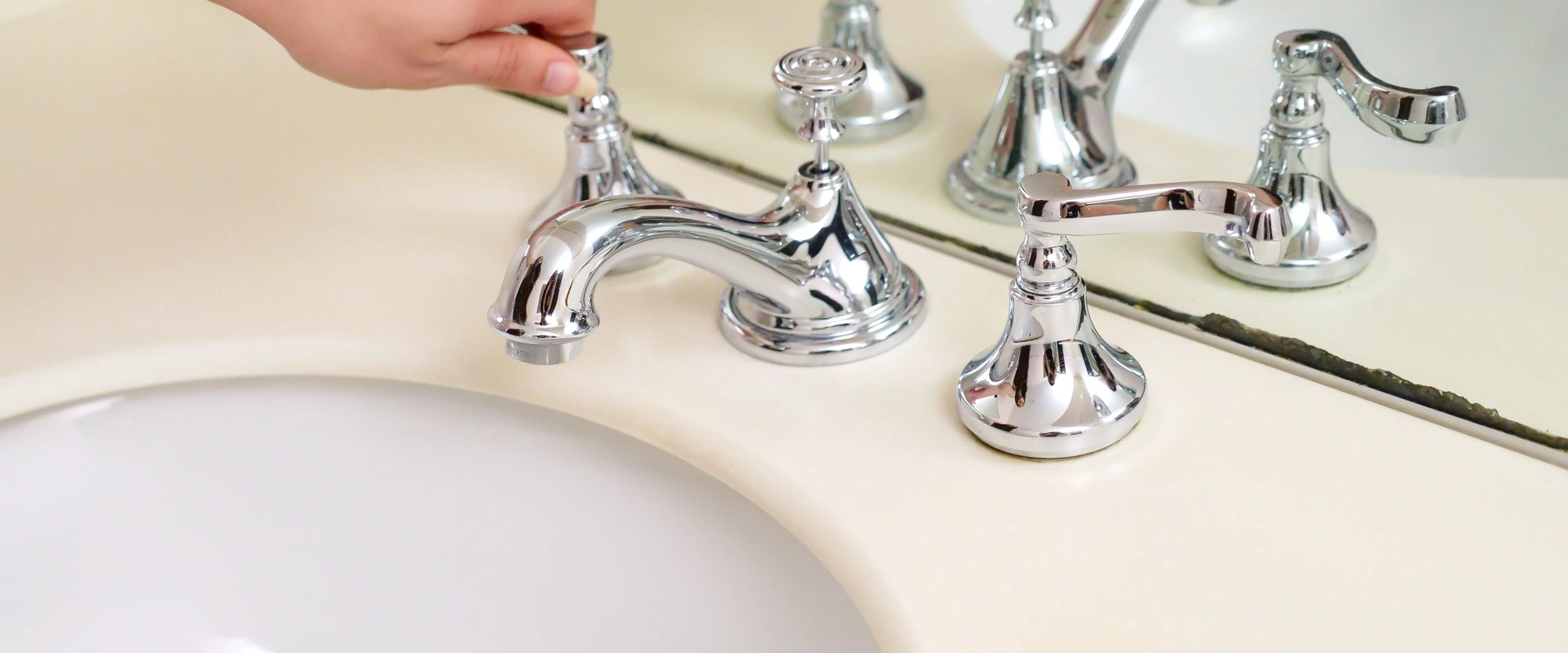
What a plumber installs in a house
Most installation calls are for one fixture or appliance connection. The plumber sets the fixture, connects the supply and the drain, tests for leaks and checks that water drains freely. Each fixture has a few parts that decide whether it works well, and the plumber matches them to what is already in the wall.
Sinks and faucets
Kitchen, bath and utility sinks with new supply lines and a trap that drains correctly.
Toilets
A new or replacement toilet, set on a fresh wax ring or seal with a new supply line.
Showers and tubs
Valves, trim, drains and the connection to the supply behind the wall.
Dishwasher and ice maker
Supply lines and drain connections for the dishwasher, plus a line to the refrigerator ice maker.
Outdoor hose bibs
Spigots for the yard, with a shutoff and, where needed, a vacuum breaker.
Washer boxes
A recessed box with hot and cold valves and a standpipe drain for the washing machine.
Most of these are straightforward. Showers and tubs are different, because the valve and drain sit behind a finished wall and often involve tile. A mistake there means opening the wall.
Remodel and new construction rough-in
Rough-in is the plumbing that goes in before walls and floors are closed. The plumber sets drain lines with the right slope, vents each fixture, runs supply lines to every location and pressure tests the system before inspection. Fixtures come later, once walls and floors are finished.
In a remodel, rough-in often means moving a fixture or adding a bathroom. A drain needs a path with the right slope, and a vent needs a way to reach the open air. That is why moving a toilet across a room is a bigger job than it looks.
The City of Cibolo enforces the 2021 International Plumbing Code (IPC), which among other things requires traps and vents on drains. Permit rules vary, so ask the City of Cibolo building department before work that adds or moves plumbing, and ask your plumber what applies.
Fixtures that are worth upgrading while you are in there
Angle stops, the small shutoff valves under a sink or behind a toilet, are a smart upgrade. Old ones seize up or leak when turned, and a fixture that cannot be isolated means shutting off the whole house for the smallest repair. New quarter-turn valves cost little in labor when a fixture is already being replaced.
Replacing the braided supply lines at the same time is also sensible. Old connectors can split without warning, and a split line under a sink can empty a lot of water before anyone notices.
If the existing faucet is the problem rather than the plan, a repair may be enough. See repairing the faucet before buying a new one.
Planning a fixture install or hookup?
Call the 24/7 line and describe the work. A licensed plumber is scheduled, and you hear the price before work starts.
Installs that tie into water treatment and hot water
Some installs bring in equipment with its own needs. A new tank or tankless unit has its own requirements for venting, gas or power and a relief valve discharge line, so it is covered in its own guide on water heater installation.
Water softeners and filters connect to the supply line and need a drain. They are covered on the water softener and filtration page, including the question of what each system does. A reverse osmosis unit under the kitchen sink is the same kind of job, with a small tank, a drinking water faucet and a drain saddle on the sink drain.
Gas lines: licensed work with its own safety rules
Gas work is not a do-it-yourself job. Installing or changing a gas line, or connecting a gas appliance, needs a licensed plumber because a poor connection can leak.
If you smell gas, leave the building first. Do not flip switches or look for the source. From a safe distance outside, call 911 and your gas utility. CenterPoint Energy is the primary natural gas provider, according to the City of Cibolo. Look up its emergency number on your bill or its website, since we do not give gas emergency numbers here. We also do not promise a response time for a gas leak.
What gas line work covers
A licensed plumber can inspect, extend or connect gas lines for appliances in a house. The common jobs are a range or cooktop, a clothes dryer, a gas water heater, an outdoor grill, a fire pit or a gas fireplace or insert.
An inspection looks at the line, the shutoff valve at the appliance, the flexible connector and whether the line is the right size for what it feeds. For a new run, the plumber sizes the pipe for the total load, routes it, adds a shutoff and tests it before it is put in service.
Pressure testing is a standard part of gas work. The plumber fills the new line with air or inert gas, watches a gauge for any drop and checks the joints before the appliance is lit. A drop means a leak, and the line is not used until it is fixed.
Converting an appliance from natural gas to propane, or the other way, is not a simple switch. The appliance needs the right parts, such as orifices and regulators, and the manufacturer's instructions govern. Tell the dispatcher what the appliance is and what you want done.
Honest limits on gas jobs
Not every gas call fits what we can send a plumber for. Some appliances need the manufacturer or an appliance technician, and some work needs a permit and inspection. The dispatcher confirms whether a gas job fits when you call, and tells you if it does not.
Permit rules vary, so ask the City of Cibolo building department about gas permits and inspections. Whoever does the work should tell you whether a permit and an inspection are needed.
If you are not sure whether a smell is gas, treat it as gas. The cost of a false alarm is small.
| Situation | Who it points to | Why |
|---|---|---|
| Smell of gas | Leave the building, call 911 and the gas utility from a safe distance | The risk is fire or explosion, and no job is worth waiting in the house |
| New gas line for a range, dryer or grill | A licensed plumber | The line must be sized, routed and pressure tested |
| Gas fireplace or insert that will not light | The appliance maker or a technician for that appliance, after the supply line is checked | The fault may be in the appliance, not the pipe |
| Conversion between natural gas and propane | A licensed plumber with the manufacturer's conversion parts | Parts and settings differ by appliance |
Outdoor faucets and getting ready for cold weather
Adding a hose bib is a common request, and so is putting in several. A bib needs a supply branch, a shutoff and a place for the line to go. If the supply line is inside an exterior wall, it can freeze and split when temperatures drop below freezing.
A frost-proof sillcock has its valve seat inside the warm part of the wall, so the water stops where it can't freeze. Disconnect hoses in cold weather, since a hose left attached holds water against the faucet. A shutoff inside the house lets you drain an outdoor line completely.
What affects the price of installation
Type of fixture
A simple toilet swap and a tub with a new valve are not the same job.
Installation is rarely covered by homeowners insurance, since it is planned work and not a loss. A policy may cover damage if an install fails and water gets out, so ask your insurer. You get a clear price before work starts.
Getting ready for install day
Choose and buy the fixture
Have the faucet, toilet or appliance on site, with its box and parts, before the visit.
Clear the space
Empty the cabinet under the sink, and move anything near the toilet, tub or washer box.
Know your shutoffs
Find the main water valve and the fixture shutoffs so the plumber can start.
Check the manual
For a gas appliance, keep the manual, model number and the type of fuel on hand.
Installations near Cibolo
We also dispatch for installs in nearby towns, such as Universal City, with the same rules. Permit and inspection offices differ from town to town, so check with the city where the house sits.
Cibolo has seen steady growth, from 3,035 people in 2000 to 32,276 in 2020 per the Census. For a homeowner that means much of the housing is relatively recent, and a plumber still checks what your fixture connects to. In any older home, general trade knowledge says galvanized supply lines or cast iron drains may be present, so the plumber looks before installing.
Common questions about plumbing installation
Permit rules vary, so ask the City of Cibolo building department. Whoever does the work should tell you whether a permit and inspection apply.
Leave the building first. From a safe distance, call 911 and the gas utility. CenterPoint Energy is the primary natural gas provider, per the City of Cibolo. Do not go back in until it is cleared.
A licensed plumber can connect gas appliances, check the shutoff and test the line. The dispatcher confirms whether your job fits when you call. A dryer or range also needs a connector sized for it.
Conversion needs the right parts, such as orifices and a regulator, and the manufacturer's instructions apply. Tell the dispatcher the make and model and they confirm whether it is something we can send a plumber for.
It is a good idea, especially if the old valves are stiff or corroded. A fixture that can be isolated saves you from shutting off the whole house for later repairs. Sometimes a leaky faucet needs only a repair, so ask.
Yes. It involves venting, gas or power and a relief valve line, and is described on the water heater installation page.