
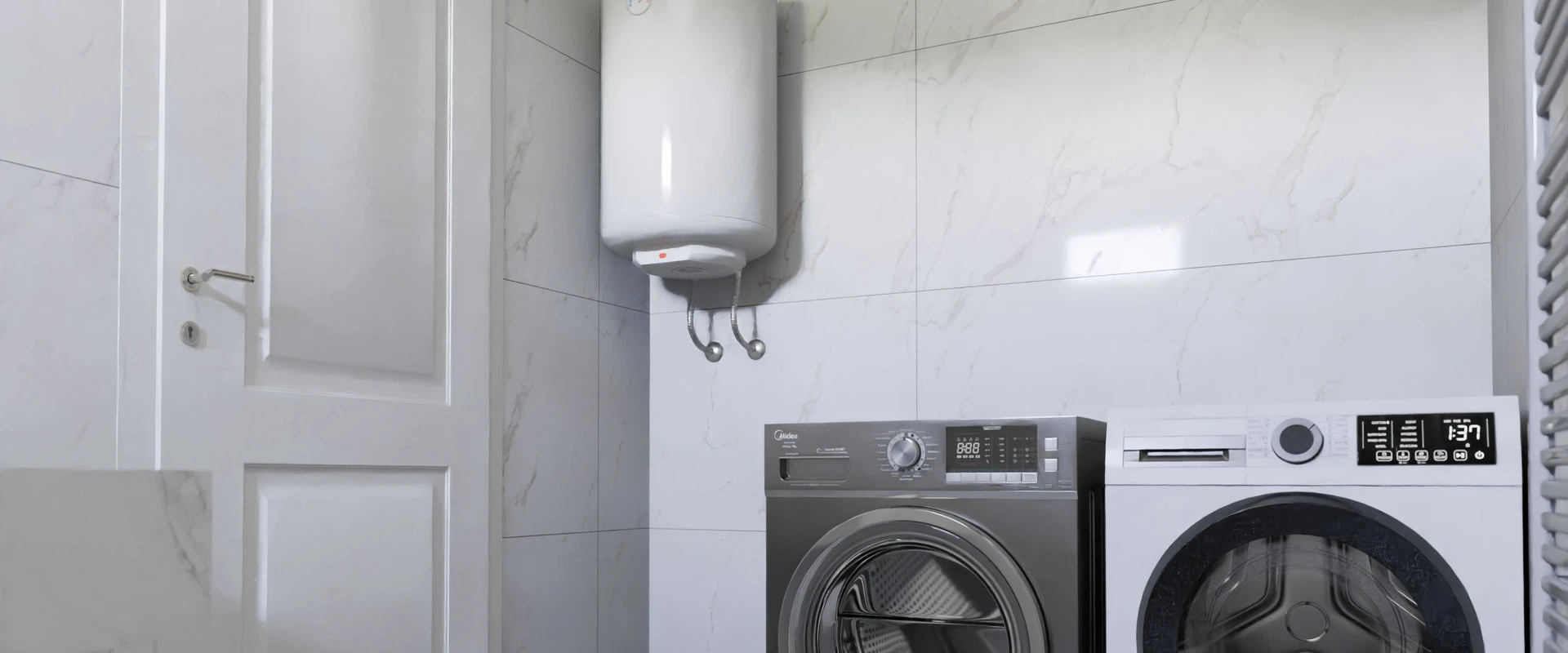
What a water heater installation includes
A water heater installation puts a new heater in a home that has none, in a new location, or on a different fuel. That is different from swapping one failed tank for another in the same spot, which is covered on the water heater replacement page. An install usually involves more decisions, because the plumber is setting up the space, not just matching an old one.
The job covers the heater and its hot and cold connections. It also covers a shutoff valve on the cold side, a temperature and pressure relief valve with a discharge pipe, and a drain pan where the code or the location calls for one. Gas units add a gas line and a vent. Electric units add a power circuit. Heat pump units add a condensate drain and clear air around the unit.
The City of Cibolo enforces the 2021 International Plumbing Code (IPC), which among other things requires a discharge line on a relief valve. Permit rules vary, so ask the City of Cibolo building department before work begins. Your plumber can tell you what the job involves, and you can ask the city whether a permit applies.
Choosing the type and size
General guidance is simpler than it sounds. A tank heater stores hot water and reheats it when it is used. A tankless unit heats water as it flows. A heat pump or hybrid unit uses electricity to move heat from the air into the water, which uses less power than standard electric elements.
Size depends on how many people use hot water and when. Tank size is measured in gallons, and the first-hour rating on the label tells you how much hot water the unit can supply in the busiest hour. A household with two showers running and a dishwasher needs more capacity than one person living alone.
Choose the fuel you have or the fuel you can bring in. A home with a gas line can use gas or electric. A home without gas is usually limited to electric or a heat pump. The sections below explain what each choice requires, and the tankless water heater page covers on-demand units.
| Type | Fuel | Main requirement | Main trade-off |
|---|---|---|---|
| Gas tank | Natural gas | A gas line and a vent to the outside | Lower running cost in many homes, more venting work |
| Electric tank | Electricity | A dedicated circuit | Simple to place, higher running cost in many homes |
| Heat pump hybrid | Electricity | Air space, a condensate drain and a circuit | Lower power use, bigger and taller than a standard tank |
| Gas tankless | Natural gas | Larger gas line and special vent | Hot water on demand, higher upfront cost |
| Electric tankless | Electricity | A large dedicated circuit | Small size, heavy electrical load |
Where the heater goes
Garages, closets and attics are the common places. Each has its own rules. A garage unit may need to be raised so that gas burners sit off the floor, because the burner can ignite fumes from gasoline or paint. A closet needs room around the unit for service, and a gas unit in a closet needs combustion air. An attic needs a pan with a drain, since a leak above a ceiling costs more than the heater.
Plan for access as well as for fit. The plumber needs room to reach the valves, the anode rod, and the drain. A heater squeezed into a tight spot is hard to service, and many manufacturers set clearance requirements in their manuals. Check the manual for the unit you choose.
Whatever the location, the relief valve needs a discharge pipe that runs downhill to a safe spot. That pipe should not be capped, plugged or reduced in size. If the valve ever opens, the water has to go somewhere safe, and it should be visible so that you notice a drip.
Moving a heater or changing fuel
Relocating a heater means rerouting the hot and cold lines, the vent, the gas or electrical supply, and the drain pan. It is often done during a remodel, when a laundry room or garage is rearranged. The new spot has to meet the same rules for venting and access as the old one.
Converting from gas to electric is simpler on the plumbing side, but it needs power. A standard electric tank wants a dedicated circuit, and a heat pump unit needs one too. Wiring is electrical work, and a plumber can set up the water side while an electrician handles the circuit. We do not do electrical work.
Converting from electric to gas goes the other way. The gas line has to be sized for the new appliance, with the length of run and the other gas appliances taken into account, and the vent has to be checked. Gas line work needs a licensed plumber. A unit that is replaced or moved can also mean redoing the vent when the old path no longer fits.
Planning a heater install or move?
Call the line and describe the space and the fuel. You hear the price before work starts.
Gas venting and carbon monoxide
A gas water heater makes carbon monoxide as a by-product of burning gas, and the vent carries it outside. The vent must slope up, stay sealed at the joints and end in the right spot. If the draft is weak, exhaust can spill back into the room. That is why venting is checked on every gas install, not assumed.
Combustion air matters too. A gas burner needs fresh air to burn cleanly. A heater in a tight closet with no air supply can burn poorly and produce more carbon monoxide. If the room was enclosed during a remodel, the air supply may need to change.
Install a carbon monoxide alarm near any gas appliance and replace its battery on schedule. If it sounds, or if you smell gas, leave the building and call 911 and the gas utility from a safe distance. Do not stay to look for the cause.
Electric units and the circuit they need
An electric tank heater uses heating elements that draw a large load, so it needs its own circuit, a breaker of the right size, and wire that matches. A heat pump unit has its own electrical needs and also needs air space. Exact sizes are set by the unit's label and the electrical code, not by the plumber.
That is the honest limit. A plumber connects the water side, and an electrician runs the circuit when a new one is needed. In many homes the existing circuit works for a like-for-like swap, but a change of fuel or size can need new wiring. Check the label on the new unit against your panel before you plan the day.
The City of Cibolo enforces the 2023 National Electrical Code, which is the electrician's rulebook. Ask the city building department how electrical permits apply to your job.
Expansion tank, pan and relief valve
Water expands when it is heated. In a closed system, with a check valve or a pressure reducing valve on the incoming line, that expansion has nowhere to go and pressure rises. An expansion tank is a small tank with an air cushion that absorbs the extra volume. Many installs include one, and the plumber can tell you whether yours needs it.
A drain pan under the heater catches a slow leak and carries it to a drain line. It is most important where a leak would damage finished space, such as an attic, a closet beside a bedroom, or a second floor. The pan should drain to a spot where water is easy to see.
The relief valve is the last safety device. It opens if the pressure or temperature gets too high, and its discharge pipe must run to a safe place. Never cap this pipe.
Planning the day of the install
Expect the water to be off for several hours. A plumber needs to drain the old tank if there is one, make the new connections, fill the tank, check for leaks and, on a gas unit, test the burner and the vent. Gas and electric jobs can take longer than a simple swap. Plan showers and laundry around that time.
Clear the area before the plumber arrives. Remove boxes from the heater space, make a path from the door, and keep pets and children away. Have the manual and the warranty card handy if you bought the unit yourself.
After the install, keep the paperwork. Record the model and serial number, the install date and the plumber's invoice. The warranty usually depends on proof of date and proper installation. The invoice should show the plumber's Responsible Master Plumber number, which you can look up on the Texas State Board of Plumbing Examiners (TSBPE) site.
What affects the price of installation
Type and size of unit
Tankless and heat pump units cost more than a standard tank, and bigger tanks cost more than smaller ones.
Homeowners policies usually cover sudden and accidental water damage, but a planned upgrade is a cost you carry yourself. Ask your insurer if a failed heater caused damage. You get a clear price before work starts.
Planning checklist
Pick the fuel and the spot
Decide gas, electric or heat pump, and where the unit goes, before you pick a model.
Check the label and the manual
Look at the venting, clearance, gas and electrical needs for the model you are considering.
Ask about permits
Contact the City of Cibolo building department about permits and electrical work.
Clear the space
Move storage out of the area and plan for the water to be off for several hours.
Installing a water heater in Cibolo and nearby towns
Cibolo grew from 3,035 residents in 2000 to 32,276 in 2020, so much of the housing is relatively recent. In any home, a heater may sit in a garage or closet set up for a standard tank, and a switch to tankless or heat pump may call for changes in the space. Ask the plumber to look at the existing layout before you choose.
The same planning applies for homes in Schertz, Selma and Universal City. For smaller fixture and line work that goes with a new heater, see the details under plumbing installation.
Common questions about water heater installation
A replacement swaps a failed heater in the same spot. An installation adds a heater to a new space, moves it, or changes the fuel. If yours has failed, see replacing a water heater.
Permit rules vary, so ask the City of Cibolo building department. The plumber can tell you what the job involves.
Yes on the plumbing side, but an electric unit needs a dedicated circuit, and an electrician handles the wiring. Gas work needs a licensed plumber, and gas line size and venting must be checked.
It depends on how many people live in the house and when they use hot water. The first-hour rating on the label is the number to compare. The plumber can help match the size to your use.
Plan on several hours. Gas and electric jobs, and moves, take longer than a simple swap.
Often yes, but tankless units can need a larger gas line and special venting or a large electrical circuit. The tankless page explains what to expect.