
Backing up right now? What to do before the jetter arrives
Stop adding water. Do not run the dishwasher or washer, and do not flush a toilet that is already rising. Put towels around a tub or floor drain that is bubbling. Skip chemical drain cleaners, because they can sit in a blocked pipe and splash on the person who opens it.
For a restaurant or shop, close the sinks and floor drains that are overflowing, keep staff out of the wet area and call. A floor drain that is backing up is a health and safety problem, and many kitchens cannot operate with it. Our line is open nights, weekends and holidays, and same-day appointments are offered when available. We do not promise an arrival time.
If you are not sure whether you need a jet at all, that is fine. Describe what is happening and the plumber picks the tool. A simple clog does not need a jetter, and the next sections show why.
How a hydro jetter works
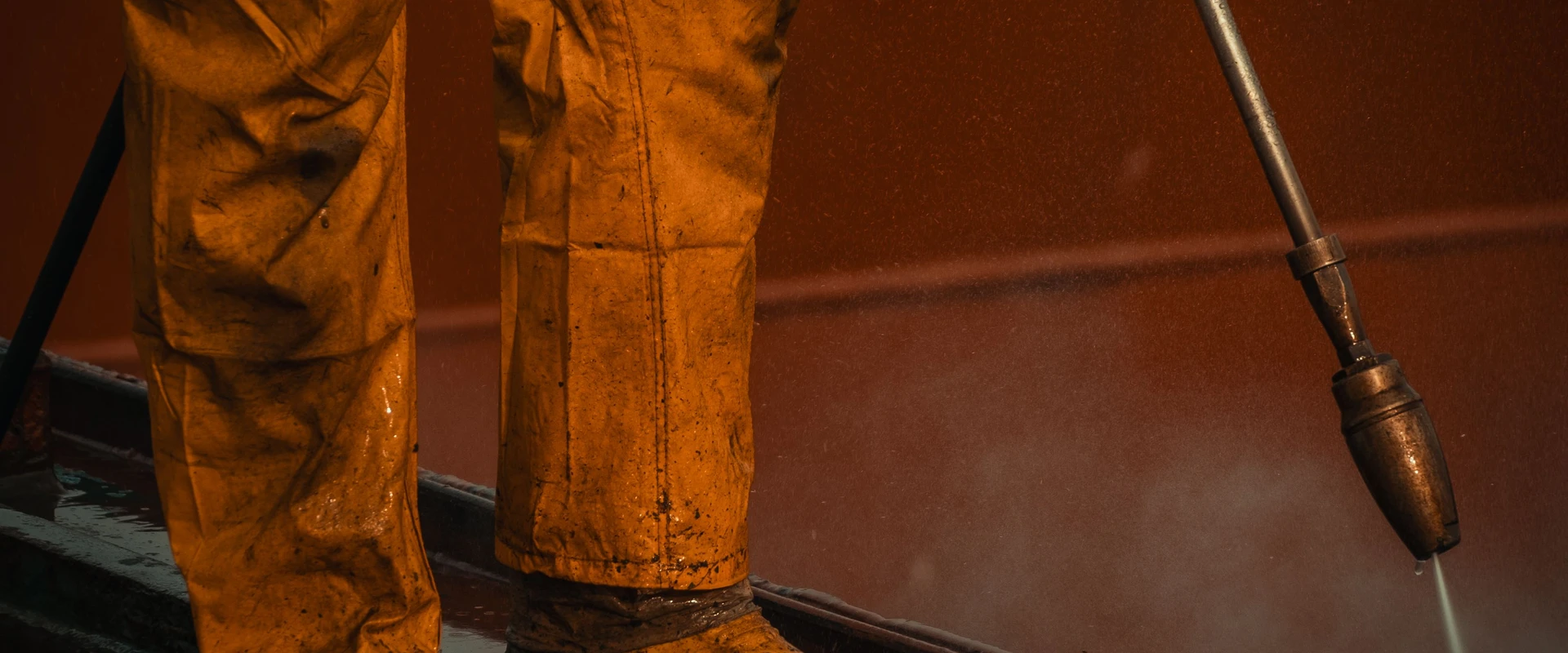
A jetter has four parts. A pump driven by an engine or motor builds pressure. A reel holds a long, reinforced hose. A nozzle at the end of the hose has several small openings. And a water supply feeds the pump, either from a water tank or from a hose connection.
The nozzle is the clever part. Most have jets that point backward and forward. The rear-facing jets push water backward and pull the hose forward through the pipe, much like a rocket. The forward jets break up the clog ahead. Other nozzles spin or have angled sprays that scour the pipe wall in a full circle.
Pressure is measured in pounds per square inch, and residential jetting generally runs well above 1,000 psi, far higher than household tap pressure. Flow rate, in gallons per minute, matters just as much. Pressure breaks material loose and flow carries it away, so a jetter with high pressure but low flow can leave debris behind.
What hydro jetting cleans well
Jetting is best against buildup on the pipe wall. That includes grease that has cooled and hardened, mineral scale left by evaporated water, soap and sludge. It also clears many fine roots that have grown into fitting joints. A cable punches a hole through a plug, while a jet strips the layer off the wall, so the pipe is closer to its original diameter afterward.
That matters because a pipe that is only partly open will clog again. Think of a 4 inch main line narrowed to 2 inches by grease and scale. A cable opens a channel, and the coating stays. A jet takes most of the coating with it.
Jetting is less suited to a single soft plug of paper and wipes in a branch, a toy lodged in a trap or a heavy root mass that fills the pipe. For those, a cable or a root cutter does the job better, and often the plumber follows with a jet to finish.
Cable or jet? How the plumber chooses
| What is in the pipe | What it usually means | Typical choice |
|---|---|---|
| A soft plug in one fixture | Hair, paper or food in a branch | Hand auger or small cable |
| Grease coating the line, repeat clogs | Buildup on the wall narrowing the pipe | Hydro jet |
| Heavy roots filling the pipe | Roots in a joint or crack | Cable with a root cutter first, then jet |
| Scale or sludge in an older line | Mineral or waste layers on the wall | Hydro jet, with a camera to check pipe condition |
| Collapsed, offset or cracked pipe | Physical damage, not a clog | Do not jet, repair is needed |
If your drain just clogged once, a cable is usually enough. If it clogs repeatedly, if the plumber's camera shows a coated wall, or if the line is a long run in a restaurant, a jet is worth the discussion. The drain basics are explained on the page about clearing clogged drains.
When not to jet a pipe
Jetting is not safe for every pipe, and an honest plumber will tell you when not to use it. A cracked, collapsed or badly joined pipe can be damaged by high pressure water. Pressure can enlarge a crack, wash soil out through a break or force a loose joint apart. Old, thin cast iron or clay can also be fragile.
For that reason, a camera comes first when the condition of the pipe is unknown. The camera shows cracks, offsets and sags, so the plumber can pick the right pressure or skip the jet altogether. A jet does not repair a pipe. If it finds a break, that is a separate repair, such as on the page about sewer line repair.
There are limits on access too. A jetter needs an entry point, such as a cleanout, so a house with no cleanout may need one added before jetting is safe. And a jet cannot reach every branch, particularly tight bends or lines with many fixtures behind them.
Home versus commercial jetting
At home, jetting is usually for a recurring main line clog, a grease-coated kitchen line or a drain that slows down every few months. The work is done through a cleanout, and a camera usually follows.
Commercial jobs differ. A restaurant sends grease, starch and food solids down its drains every hour. Grease traps and interceptors catch some of it, but the pipes after the trap still coat over time. Floor drains and trench drains collect wash water and debris and can clog with grit. Jetting suits these long, greasy runs, and many kitchens put it on a regular schedule.
Two points are worth knowing. Pumping a grease trap, which is hauling away the grease and sludge the trap has collected, is a separate service from jetting the lines. Ask the dispatcher which one you need, because a pumped trap does not clean the pipes. And a business may have rules on grease, so check your lease or local requirements. More on business work is on the commercial plumbing page.
How a jetting visit goes
Camera first
The plumber runs a small camera into the line to see the blockage and the condition of the pipe before any water pressure is used.
Open the line
If the line is fully blocked, a cable or small jet nozzle may open a path first, so the jet hose can travel through.
Jet in passes
The hose goes in with the rear jets pulling it forward, then is drawn back slowly so the spray scours the wall. Longer lines take several passes.
Camera again
A second look confirms the wall is clean, shows whether any damage was hiding behind the buildup and records the result.
Expect water. Some jetting returns water and debris at the cleanout, so the plumber sets up to catch it. Wastewater at that point is dirty, and the plumber wears protective gear.
Drain keeps clogging or backing up?
Call the 24/7 line. A licensed plumber is dispatched, and you get a clear price before work starts.
What to do before the plumber arrives
Clear the way to the cleanout, the kitchen sink or the floor drain. Move vehicles, bins and boxes. Stop using water where you can, and tell the dispatcher if you or your staff already used a chemical cleaner, or if you know of a past collapse or pipe repair.
For a business, have someone on site who can show where the grease trap, cleanouts and floor drains are. A plan of the plumbing, even a rough sketch, saves time. Write down the last time the line was cleaned and what was done.
What hydro jetting cannot fix
Jetting cleans a pipe. It cannot repair a crack, fix a pipe that has dropped out of line or stop roots from returning. If roots re-enter every few months, a repair or replacement of the joint is what stops them. If a pipe has a belly, a low spot where waste settles, jetting clears it but the low spot stays, and it can clog again.
Jetting also cannot fix a blockage that is not in your pipe. If the clog is downstream in the public sewer, the utility has to clear it. And it will not fix a venting problem that makes drains gurgle or drain slowly. The camera and the plumber's examination usually show which problem you have.
What affects the price of hydro jetting
Length of line
A long run takes more time and more water than a short one.
Homeowners insurance generally treats buildup as maintenance, so a cleaning is not usually covered. Ask your insurer about water damage that follows a sudden backup. You get a clear price before work starts.
Jetting and the pipes in Cibolo, TX
The City of Cibolo enforces the 2021 International Plumbing Code (IPC), which sets how traps, vents and cleanouts are installed. A house with no cleanout, or a commercial kitchen with an old trap layout, may need that fixed before a jet can be used safely. Permit rules vary, so ask the City of Cibolo building department before changing the drain layout.
Sewer billing changed in November 2025. According to the City of Cibolo, it no longer bills sewer, and Green Valley Special Utility District adds the sewer charge. GVSUD lists (830) 914-2331 for suspected sewer clogs. If neighbors have the same backup, call them before arranging a jetting visit, because the clog may be in the public main.
We also take jetting calls in Converse and the other nearby towns, and the process is the same there. We do not know your pipe material, so the camera comes first.
Common questions about hydro jetting
Jetting calls are taken at any hour of any day, and a licensed plumber is dispatched with same-day appointments when available. The dispatcher cannot name an arrival time, but will ask whether the line has been cabled before and whether roots or grease are suspected, since that decides whether jetting fits. Keep water use low and skip chemical cleaners, which can splash back on whoever runs the hose. You hear the price before the jetter is set up.
It can, if the pipe is already cracked, collapsed or badly joined. That is why the plumber looks with a camera first when the condition is unknown, and skips the jet when the pipe is fragile.
It depends on the clog. A cable is fine for a single plug. A jet cleans the wall and suits grease, scale and repeat clogs. Many jobs use both.
There is no set interval. It depends on the volume of cooking, the grease trap and past clogs. A plumber can suggest a schedule after seeing the lines on camera. Grease trap pumping is a separate service.
Yes, through a cleanout or the toilet flange, when a cable has not solved a repeat clog. A single stopped toilet usually does not need it. Try the steps on the page about clearing clogged drains first.
Not on its own. It clears roots in fitting pipes, but if they entered through a gap, they return. A repair or scheduled cleaning keeps them out.