
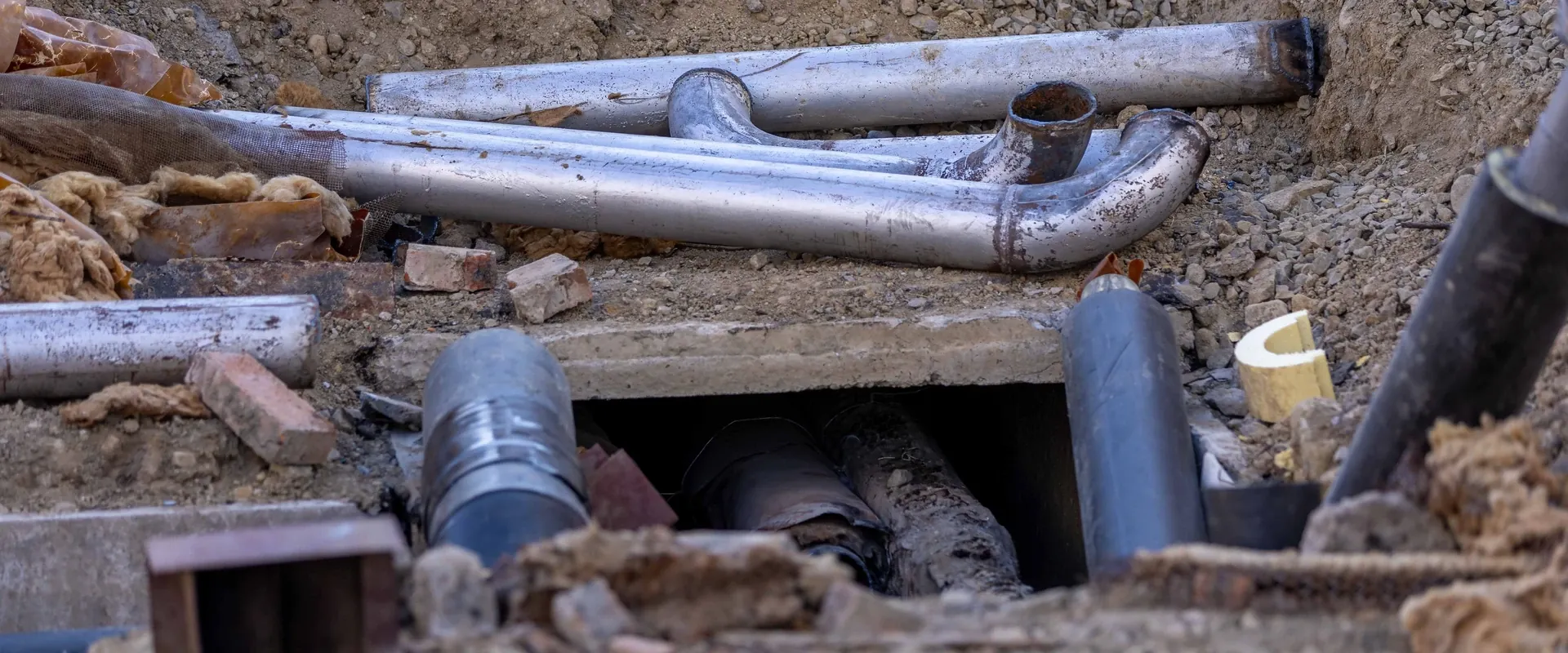
Sewer line repair in Cibolo, TX: when a clog is really a break
Sewer line repair in Cibolo, TX is the fix for a pipe that is cracked, collapsed, sagging or invaded by roots, not just clogged. A clog can be cleared with a cable or jet. A damaged pipe will clog again unless the pipe is repaired. The difference matters, because clearing a broken line over and over costs more than fixing it once.
Your sewer line runs from the house to the public main, usually under the yard. Gravity moves the waste, so the pipe must slope downhill all the way. Anything that creates a low spot, a gap or a rough edge gives solids a place to stop. Over time a small snag grows into a full blockage.
If you do not yet know what is wrong, cleaning the line is often the first step, and a camera shows whether cleaning is enough or a repair is needed.
Sewer backup: what to do first
Treat a sewage backup as an emergency. Wastewater carries bacteria, and it ruins flooring and drywall fast. Stop using sinks, tubs, the washer and the dishwasher, and do not flush. Water you add has only one place to go.
Keep people and pets away from sewage. Wear gloves and boots if you must step in it, and keep the area ventilated. Turn off power to any room with standing sewage near outlets only if you can reach the breaker without stepping through it.
Our line is open nights, weekends and holidays, and a licensed plumber is dispatched for same-day appointments when available. Waiting until morning is a poor choice if sewage is rising in a tub or a floor drain.
Signs the sewer line is damaged
Some signs are easy to spot, and others build slowly. A pattern across several fixtures is more telling than one slow sink.
Multiple drains back up together
The shower gurgles when the washer drains, or a toilet bubbles when you run a sink. The shared main line is restricted.
Gurgling and bubbling sounds
Air is being forced back through traps because water cannot move down the pipe.
Sewage smell indoors or in the yard
A crack or open joint lets sewer gas escape, or a dry trap lets it in.
A lush, wet patch in the yard
Wastewater leaking from a broken pipe feeds the grass and keeps the soil soft.
Drains that slow down again soon after clearing
Roots, a sag or a break keeps catching new debris.
Settling soil or a sunken spot
Water washing soil into a broken pipe can leave a void and a dip above it.
Do not confuse a sewer smell in one bathroom with a line failure. A dry P-trap in a rarely used sink or floor drain is a common source and needs only water in the trap. A smell that follows a backup or appears in several rooms points to the line.
How a camera inspection finds the problem
A sewer camera is a small waterproof lens on a flexible cable that is fed into the line through a cleanout. The plumber watches a live view and can record it. The camera shows what the pipe actually looks like, which beats guessing from symptoms.
What the camera can show:
- A belly, which is a low spot where the pipe has sagged and water sits
- An offset joint, where two sections no longer line up
- A crack or break in the pipe wall
- Root intrusion, where fine roots have entered through a joint
- A collapse, where the pipe has caved in and the camera cannot pass
A locator at the surface can then mark where the camera head is, so the plumber knows how deep the pipe is and where to dig if it comes to that. The full process is described under sewer camera inspection.
Cameras have limits. A heavily blocked line may need cleaning before the camera can pass. A collapse can stop the camera, so the pipe beyond it stays unseen. Debris and water can obscure a view. Murky images do not prove a pipe is fine, and the plumber should say so when the view is poor.
Sewage in the tub or drains gurgling?
Call the 24/7 line. A licensed plumber is sent out, and you hear the price before work starts.
Repair options and their trade-offs
There is no best method for every line. The right choice depends on the type of damage, the depth, what sits above the pipe and the condition of the rest of the line.
| Method | How it works | Where it does not fit |
|---|---|---|
| Spot repair by digging | The plumber excavates to the damaged section, cuts it out and replaces it with new pipe | Deep lines, lines under a driveway, slab or mature tree make it costly and disruptive |
| Cured-in-place pipe lining | A resin-soaked liner is pulled into the old pipe and cured to form a new pipe inside it | A collapsed, badly offset or heavily bellied pipe, and lines with sharp bends may not accept a liner |
| Pipe bursting | A cone is pulled through the old pipe, breaking it outward while pulling in a new pipe | Needs entry and exit pits, and may not suit lines near other buried utilities or in unstable ground |
Digging is the most direct option and is often the right one for a single bad joint. It shows you the pipe, and the repair is easy to check. It also disturbs the yard, and the plumber has to restore the surface.
Trenchless methods reduce digging, which helps when the line runs under a slab, a driveway or landscaping you want to keep. They need a pipe that is clear enough to line or burst, and they do not fix a bad slope. Ask the plumber why a method fits your line, not just what it is called.
Lining a pipe that runs under a slab is a request that comes up often. It is possible in some cases, depending on the pipe and the damage, and the plumber can say after a camera inspection.
Cleanouts: the access point
A cleanout is a capped pipe that gives direct access to the sewer line. It is often found outside near the house, or inside a garage or utility area. Removing the cap lets a plumber run a cable, a jet or a camera into the line without going through a toilet.
If your home has no accessible cleanout, the plumber may have to pull a toilet or cut access, and installing a cleanout can be part of a repair. Do not open a cleanout when the line is full of sewage unless a plumber advises it, because pressure can send waste out. Keep the area around it clear.
Who owns which part of the line
The line has two parts. The lateral from your house to the property line is generally the homeowner's. The public main in the street belongs to the utility. Where exactly the dividing point sits can vary, so confirm with your utility before assuming either way.
According to the City of Cibolo, since November 2025 the City no longer bills sewer. Green Valley SUD (GVSUD) adds the sewer charge. GVSUD lists an emergency line for suspected sewer clogs at (830) 914-2331, and its main line is (830) 914-2330. If neighbors have the same backup, or a manhole near your home is overflowing, call the utility first, because the problem may be in the public main.
If only your home is affected, a plumber can use the camera and the cleanout to tell which side of the property line the problem is on. Settling that question first decides who pays.
Permits, utility locates and insurance
Permit rules vary, so ask the City of Cibolo building department before any digging or pipe replacement. The City enforces the 2021 International Plumbing Code (IPC), which sets how drains, traps and vents are installed.
Underground gas, electric, water and communication lines can run near a sewer line, and hitting one is a danger and an expense. This is general safety knowledge. Do not start digging on your own, and ask the plumber or your utility about having buried lines marked.
Insurance varies. Many homeowners policies do not cover wear, root damage or a deteriorated pipe, and sewer backup is often an endorsement you have to add. Ask your insurer what applies before assuming either way, and keep photos of any damage.
What affects the price of sewer line repair
Length of pipe to repair
A single bad joint is a smaller job than a long run of failed pipe.
You get a clear price before work starts, and if the camera shows something different from what was expected, you hear that before anything else is done.
What to do before the plumber arrives
Stop adding water
Do not run sinks, the washer or the dishwasher, and avoid flushing. Every gallon has nowhere to go.
Protect the floor
Put towels and plastic around backed-up drains, and lift rugs and boxes out of the way.
Find the cleanout
Clear the area around the cleanout cap, indoors or out, but do not open it if sewage is rising.
Note the pattern
Write down which drains are affected and when it started. If neighbors have the same problem, call the utility too.
Nearby towns and daytime visits
We also take sewer line calls in Selma and Schertz, and the steps are the same. Each city has its own utility and code office, so check which one applies to your address. For a slow drain without a backup, clearing the drain is usually the first step, and a daytime appointment may be enough.
Common questions about sewer line repair
Sewage trouble is taken seriously at any hour, so the line stays staffed on nights and weekends, and a licensed plumber is dispatched with same-day appointments when available. The dispatcher declines to guess at an arrival time and instead asks whether one drain or several are backing up, which points toward the main line.
Stop using sinks, showers and toilets and keep children and pets away from standing wastewater. A clear price is given before any excavation or lining work begins.
If only your home is affected, the problem is likely on your side. If neighbors are backed up or a manhole is overflowing, call the utility. GVSUD lists (830) 914-2331 for suspected sewer clogs. A plumber can also check with a camera and the cleanout.
Sometimes. Cured-in-place lining and pipe bursting reduce digging, but they do not fit every pipe. A collapsed or badly offset pipe may need a spot repair by digging. The plumber explains why a method fits your line.
It is a capped access point on the sewer line. It lets a plumber run a cable, jet or camera into the line. If your home has none, the plumber may suggest adding one during a repair.
Policies vary. Many do not cover wear or root damage, and sewer backup often requires an endorsement. Ask your insurer before work starts.
They can be cut back, but if roots entered through a crack or open joint, they return. A camera shows the break. See what a camera inspection covers for how that works.