
Gas smell first: what to do
If you smell gas, do not look for the source and do not flip a switch, light anything or use a phone inside. Leave the building first. Once you are outside and at a safe distance, call 911 and your natural gas utility. According to the City of Cibolo, CenterPoint Energy is the primary natural gas provider in Cibolo, but call 911 first and let them direct the next steps.
Do not go back inside until you are told it is safe. We never promise a response time for a gas leak, because that call belongs to the emergency services and the gas utility. A water heater problem can wait. A gas smell cannot.
This matters here because installing a gas heater means making and testing gas connections, and a poorly made one can leak. That is the main reason this job is not one to guess at.
Signs your gas water heater is due for replacement
Tank water heaters often last roughly 8 to 12 years, which is general trade knowledge and not a figure for any particular home. Age alone is not a reason to replace one, but it raises the odds of failure.
Water pooling around the base is the strongest sign. A leak from the tank body means the steel has corroded through, and no repair fixes that. Rusty hot water, rumbling or popping from sediment, a pilot that keeps going out, and a rising gas bill with the same use all point toward a tired unit. A leak at a fitting or the relief valve may be repairable, but a leaking tank body means replacing the heater.
If the heater is leaking, shut off the cold water supply to the tank and set the gas valve to off or pilot. If water is spreading, close the main water valve for the house as well.
Sizing the new heater
Capacity should match how your household uses hot water. A tank that is too small runs out. One that is too large costs more to buy and to keep hot. Common residential tanks hold 30, 40 or 50 gallons, with larger sizes for big households.
Look at the first-hour rating on the label, which tells you how much hot water the unit can deliver per hour starting from a full tank. That number matters more than the tank volume for busy mornings. Count the number of people, the bathrooms and any large soaking tub, then compare.
Also measure the space. A replacement that is taller or wider than the old one may not fit under a shelf, in a closet or on an existing platform. A plumber will check clearances while sizing.
| Question | Why it matters | What to check |
|---|---|---|
| How many people use hot water | Peak demand drives capacity | First-hour rating on the label |
| How big is the space | A tall tank may not fit | Height, width and clearance to walls |
| Where does it vent | Venting changes with the unit | Existing vent size and path |
| Where does it drain | A relief valve needs a discharge path | Floor drain or exterior outlet |
Venting and combustion air
A gas heater burns fuel and produces exhaust, including carbon monoxide. The exhaust must leave the building through a vent pipe or flue that is the right size, slopes upward, has secure joints and ends at an approved outlet. A heater also needs air to burn properly. In a tight closet or utility room, it may need openings or ducts that bring in combustion air.
When you replace a heater, the vent often has to be changed too. Newer units may use different vent sizes or a different vent type. Old vents can rust through, separate at joints or be partly blocked. Reusing them without inspection is a common mistake.
Never seal off or modify the vent to make a replacement fit. Do not rely on your nose or a visual look to decide that a vent is fine, because carbon monoxide has no smell. Install battery or plug-in carbon monoxide alarms near sleeping areas and test them. If an alarm sounds, get everyone outside and call 911.
Gas supply, sediment trap and connectors
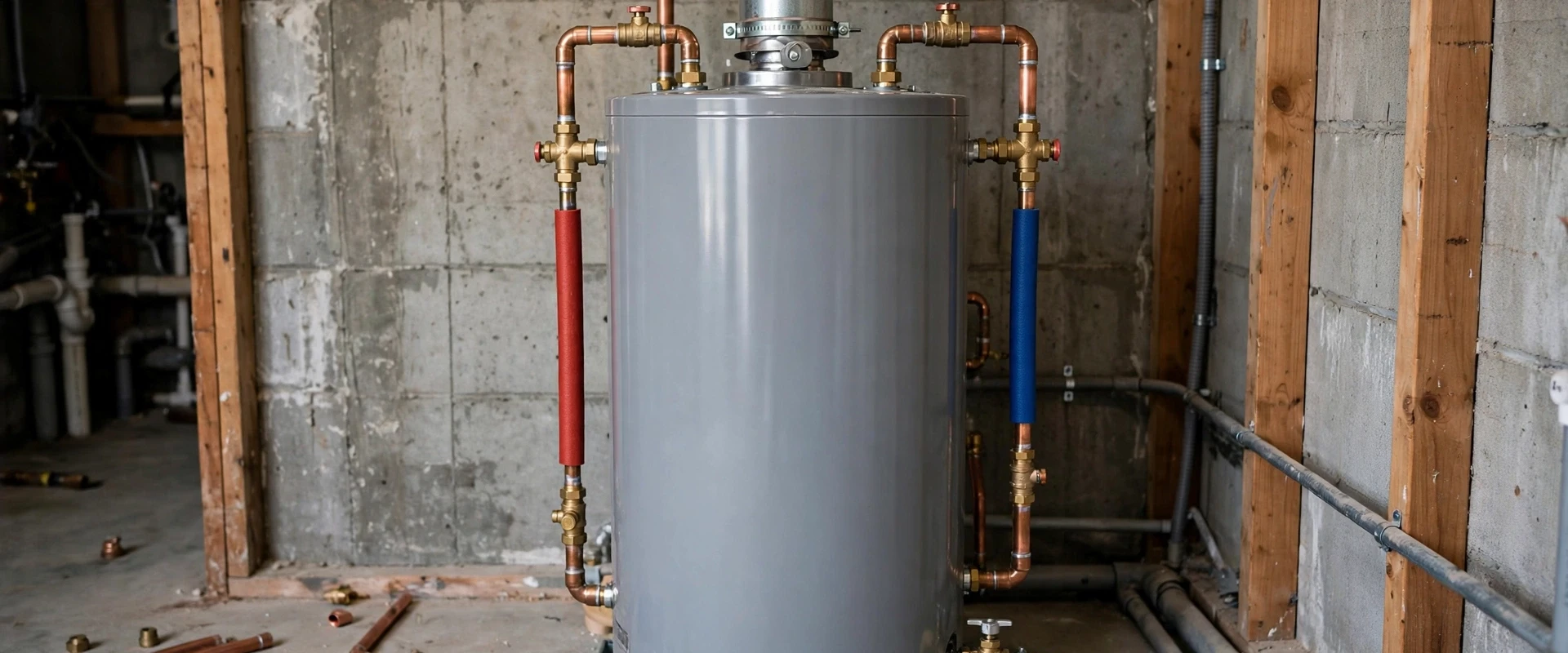
The gas line feeding the heater has a shutoff valve, usually a lever within reach of the unit. A sediment trap, also called a drip leg, is a short vertical section of pipe with a cap that catches debris and moisture before they reach the gas control. The 2021 International Plumbing Code (IPC) is the plumbing code the City of Cibolo enforces, and fuel gas installations are covered by separate fuel gas rules, so ask the City about what applies.
A flexible gas connector links the rigid gas line to the heater. These are rated for specific uses and should not be reused from an old heater. A kinked, corroded or reused connector is a leak risk. Each joint is sealed with a gas-rated compound or tape, not ordinary plumber's tape meant for water.
After connecting, every joint must be checked for leaks. Plumbers use a soapy water solution on the fittings, which bubbles at a leak, and may use a pressure test. Homeowners may know the soap trick, but it only helps if you know the connections are correct. If you smell gas at any point, do not keep testing. Leave and call 911 and the gas utility from outside.
Rather leave the gas work to a pro?
Call the 24/7 line. A licensed plumber can handle the installation, and you hear the price before work starts.
Relief valve, discharge, expansion tank and drain pan
Every tank heater has a temperature and pressure relief valve. It opens when the tank gets too hot or too much pressure builds, preventing a rupture. A discharge pipe must be attached to the valve and run downward to a safe place, with no valve or cap on the end. Never plug a relief valve or block its pipe.
An expansion tank absorbs the extra volume created when water heats up. In a closed system, such as one with a check valve or a pressure reducing valve at the meter, that extra volume has nowhere to go, and pressure climbs. An expansion tank handles it. Whether yours needs one depends on the plumbing configuration.
A drain pan sits beneath the heater and catches leaks from a failing tank. In an attic, closet or upper floor, the pan is piped to a drain or outside. A pan does not replace a quality installation, but it limits damage when something fails.
Why gas work calls for a licensed plumber
Gas piping, venting and combustion are risks that combine in one appliance. A small error, such as a loose union, a missing sediment trap, a poorly sloped vent or a bad connector, may not show up for months. It shows up as a gas leak, a carbon monoxide event or a fire.
Hiring a licensed plumber means the person on site is trained to work with these systems, and the work goes through the required checks. Permit rules vary, so ask the City of Cibolo building department whether your replacement needs a permit. A licensed plumber will normally know and handle it. It also helps to keep the paperwork from any permitted job with your home records.
You can read about the process on the water heater installation page, which covers the planned side of the work, including a new location or a different fuel type.
What the day looks like
A replacement is usually a single-visit job, though the time depends on the home. The plumber confirms the problem and the unit size, shuts off the water and gas, and drains the old tank. The old unit is disconnected and moved out, then the new one is set in place with a pan if needed.
Next come the water connections, the gas line with a new connector and sediment trap, the vent and the relief valve discharge. The plumber fills the tank, bleeds air from the lines, checks every joint for leaks, lights the burner and watches the flame. The vent is checked for proper draw and the temperature is set. Ask whether haul-away is included. You get a clear price before work starts, and the work is explained before the plumber leaves.
Water heater replacement in Cibolo: what to know locally
According to the City of Cibolo, CenterPoint Energy is the primary natural gas provider, so that is who to reach from a safe place if you suspect a gas leak, along with 911. We do not list a gas emergency number here, because the call is best made from outside the building and through 911.
The City of Cibolo enforces the 2021 International Plumbing Code (IPC), and permit rules vary, so ask the City of Cibolo building department before replacing a heater. That one call tells you what applies at your address.
Water service in Cibolo comes from the City or from Green Valley SUD, depending on where you live, and the bill names the provider. A shutoff valve for the house is a good thing to find before a heater fails. Homes in nearby Universal City and Schertz follow the same steps, though permit rules vary.
Common questions about gas water heater replacement in Cibolo
Electric and gas heaters are different. For gas, the connections, venting and combustion air all matter, and errors are dangerous. Most homeowners are better served by a licensed plumber for the gas portion.
Permit rules vary, so ask the City of Cibolo building department. They can tell you what applies to your address and whether the work needs an inspection.
Leave the building at once. Once you are outside at a safe distance, call 911 and the gas utility. Do not use switches, flames or phones inside, and do not go back until you are told it is safe.
According to the City of Cibolo, CenterPoint Energy is the primary natural gas provider. Check your gas bill to confirm who serves your address.
You usually cannot tell by looking, and carbon monoxide has no smell. Install carbon monoxide alarms, and have a licensed plumber inspect the vent during replacement.