
Where freeze damage actually happens
A pipe splits when ice forms inside it and pressure builds between the ice plug and a closed faucet or valve. The split is usually not where the ice sits. It is on the section between the plug and the closed end. That is why a pipe can look fine while frozen and then leak the moment it thaws.
The places most at risk are the ones with the least heat around them. Think of pipes running through exterior walls, attics, garages, crawlspaces, uninsulated cabinet backs and outdoor fixtures. Hose bibs (outside spigots) are the classic case, because a connected hose traps water in the short pipe behind the faucet.
Irrigation is another weak point. A backflow preventer standing above ground on a sprinkler line holds water inside its body, and a pipe that runs outside has little protection. If a home has a sprinkler system, the above-ground parts are worth a look before a cold night.
You do not need to know exactly how cold it will get to prepare. The steps below are cheap, they take an afternoon, and they also help during any emergency that makes you shut the water off.
Know and test your main water shutoff
Most freeze damage gets expensive because nobody can find the shutoff while water is pouring out. The main valve is where the line enters the house. It may be at an exterior wall, in a garage, in a utility closet or near the water heater. A second valve sits at the meter, but that one usually belongs to the utility and should be left alone.
Find the valve now and turn it all the way off, then on again. A ball valve (a lever handle) turns a quarter turn. A gate valve (a round wheel handle) turns several rotations and can seize if it has not moved in years. If a valve will not turn, or it leaks around the stem, that is worth a plumber's visit before you need it in a hurry.
Make sure everyone in the household knows where it is. A bright tag on the handle takes a minute and saves a lot of searching in the dark.
A prep checklist before the weather turns
Disconnect and cover
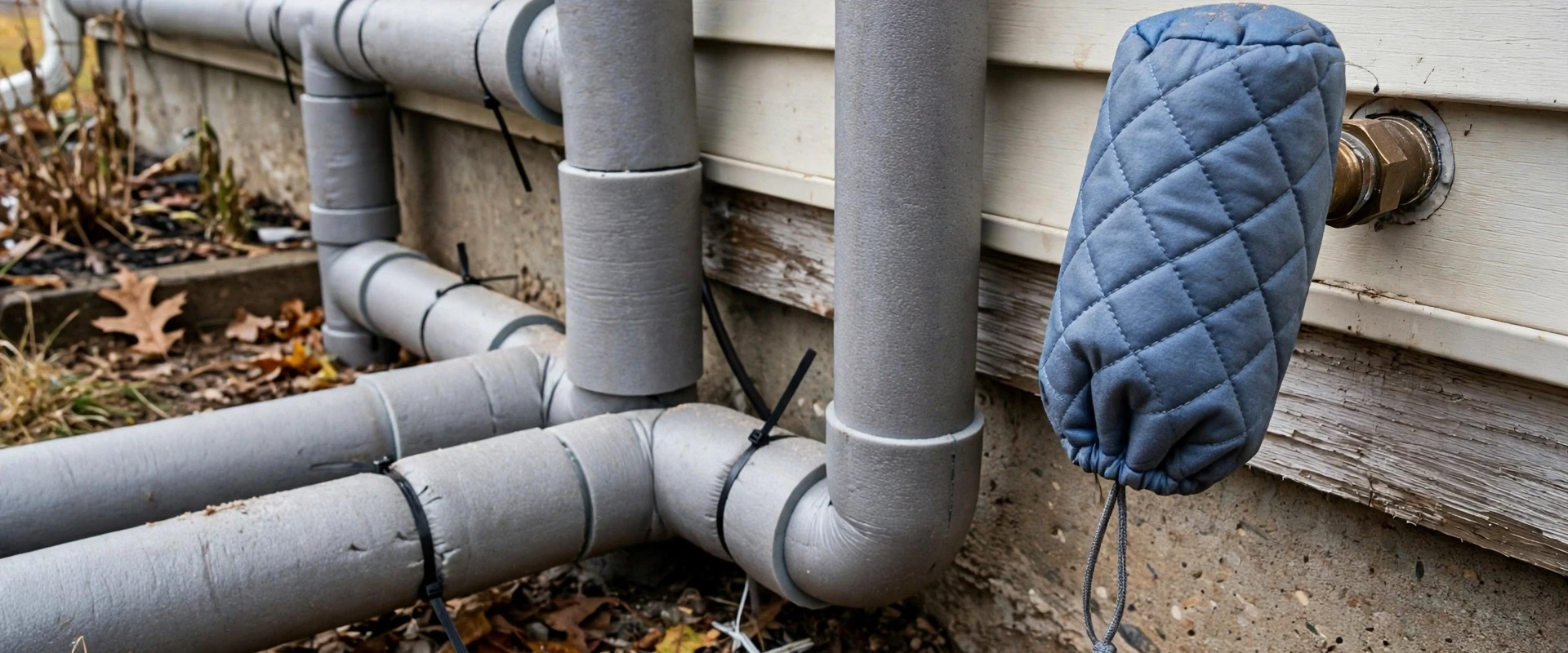
Remove garden hoses, drain them and store them. Cover each outdoor spigot with an insulated cap or a foam cover.
Insulate exposed pipe
Wrap pipes in attics, garages and exterior walls with foam sleeves or heat tape made for plumbing. Follow the tape manufacturer's directions.
Open the cabinets
On a cold night, open the doors under sinks on exterior walls so the room's warmth can reach the pipes.
Let faucets drip
A thin steady drip keeps water moving. Choose the farthest faucet from the main, and expect a small rise in use.
Switch off irrigation
Turn the controller to off and shut the valve feeding the system if you can find it.
Keep a plumber's number
Save the 24/7 line and the utility numbers on your phone before you need them.
Dripping faucets are a general practice and not a sure fix. A drip keeps water moving and takes pressure off a closed system, but it will not save a pipe in an uninsulated wall on its own. Treat it as one layer along with insulation and a shutoff you can find.
Some homes have a pipe run that the family never sees. If you know a cold wall, an attic run or a garage line has frozen before, insulate that section first.
If a pipe freezes but has not burst
Signs are a faucet that runs as a trickle or not at all, frost on an exposed pipe, or a bulge in a line. Do not wait. Turn off the main valve and open the faucet on the affected line so the thaw has somewhere to relieve pressure.
Thaw slowly, with warm air, never an open flame. A hair dryer on low, a heater placed safely near the pipe, or warm towels all work. Start at the faucet end and move toward the frozen part, because that lets melted water drain out as you go. A propane torch can ignite framing, melt solder joints and start a fire, and it can also boil the trapped water and burst the pipe.
Once water flows again, check the pipe along its length for cracks, drips and damp spots. Leave the main valve closed until you have looked. If water sprays or soaks the wall, close the valve again and call a plumber, because a hairline crack can hide behind drywall and show up as a stain days later.
If a pipe bursts
Act in this order. Close the main shutoff. Open a faucet at the lowest level to drain pipes and take pressure off the break. If the water heater is nearby, switch off its power or gas supply only if you can reach it without standing in water.
If water is near electrical outlets, a panel or lit equipment, stay out of the area and turn off power at the breaker only if the breaker is dry and you can reach it safely. If you cannot, leave the room and call a licensed electrician or the electric provider. Guadalupe Valley Electric Cooperative serves Cibolo homes with electric service.
Move belongings out of the wet area, take photos of the damage for insurance, and call a plumber. Natural gas is a different emergency. If you smell gas, leave the building, call 911 and the gas utility from a safe distance, and do not use a light switch or phone inside.
| What you see | What it likely means | First move |
|---|---|---|
| Faucet trickles or no water, pipes look intact | Ice plug in the line | Open the faucet, thaw slowly with warm air |
| Frost on an exposed pipe or visible bulge | Ice has formed and the pipe is stressed | Close the main and thaw gently, then inspect |
| Water spraying or pooling after a thaw | A split pipe or joint | Close the main shutoff and call a plumber |
| Stain growing on a ceiling or wall | A split inside the wall or attic | Close the main, avoid the wet area, call a plumber |
| Outdoor spigot drips inside the wall | Frozen hose bib broke behind the faucet | Close the main or the spigot's shutoff and call |
What to do when you leave home
A trip during cold weather is the riskiest time, because nobody is there to notice a drip. Before you go, shut off the main valve if you can, then open a faucet to drain the lines. Leave heat on at a modest setting rather than turning it off, and open cabinet doors under sinks on exterior walls.
If your water heater is a tank model, ask the manufacturer's manual about vacation or pilot settings before you turn anything off. Having a neighbor or relative check the house is a good idea too. If a pipe splits while you are away, a short visit can save the floors and ceilings.
Not sure whether a pipe is cracked?
Call the 24/7 line. A licensed plumber can check the line, and you hear the price before work starts.
Freeze prep and the February 2021 notice: what to know in Cibolo
In February 2021 the City of Cibolo issued a boil water notice for its Upper Pressure Zone after reduced distribution system pressure, according to the City. The City stated that the notice was required by the Texas Commission on Environmental Quality (TCEQ). GVSUD customers were told to contact GVSUD, which tells you that the first thing to know is which provider serves your address.
Two providers serve Cibolo, the City of Cibolo and Green Valley Special Utility District, and the one that bills you depends on your address. Look at the name on your bill and save that utility's number. The City's Utility Billing Office is 210-658-9900, extension 3131.
That event was about distribution pressure and not about what was happening inside anyone's pipes, but the lesson is practical for you. Keep some drinking water stored, and know your own shutoff so you can stop water at the house. The City of Cibolo also enforces the 2021 International Plumbing Code (IPC), and permit rules vary, so ask the City of Cibolo building department before moving or replacing lines in walls.
Our line covers nearby towns, including Schertz and Universal City, with the same steps.
After the thaw: check, repair and insure
Once water is back on, walk the house. Look at ceilings for new stains, listen for hissing, and check under sinks and around the water heater. Watch your water meter with every fixture off, because a moving meter points to a leak somewhere. That check is covered under leak detection, including how plumbers pinpoint a hidden split before opening a wall.
If a pipe has burst, the repair depends on where it split. A short section may be cut out and replaced, an accessible joint may be redone, and a long run damaged repeatedly may deserve replacement. A plumber should explain the options and the price before work starts.
Insurance is worth a call early. Many homeowners policies cover sudden and accidental water damage, including a burst pipe, but not slow leaks or damage from lack of maintenance. Ask your insurer, keep your photos and the plumber's invoice, and ask whether a deductible applies. Restoration and drying are a separate trade from plumbing, and your insurer can advise who to use.
Common questions about freeze protection
It is a general practice that helps keep water moving, especially on the line farthest from the main or one that runs through an exterior wall. It does not replace insulation and a known shutoff. Choose a thin steady drip, not a stream.
No. An open flame can ignite framing, melt solder and boil the water trapped in the pipe. Use warm air such as a hair dryer, and start near the faucet and work back.
Check your water bill. Two providers serve Cibolo, the City and Green Valley Special Utility District, and which one applies depends on the address. In February 2021 the City's notice covered its Upper Pressure Zone and GVSUD customers were told to contact GVSUD.
Yes, if a hose is connected or the spigot is uncovered. Remove the hose, drain it and put an insulated cover on the faucet. Leaking from the wall behind the spigot after a thaw means the pipe may have split, so close the shutoff and call about burst pipe repair.
Yes. The line is answered around the clock, and a licensed plumber is dispatched for same-day appointments when available. We do not promise an arrival time, and you hear the price before work starts.