
Why a high water bill usually means a leak
A bill is the meter reading times the rate, so a bill that jumps means more water passed the meter. Habits change slowly, but leaks run all day and night. A toilet that keeps refilling can waste hundreds of gallons in a day, and a pinhole in a pressurized line can run unnoticed for weeks.
Leaks also hide. Water travels along pipes, through insulation and under flooring before it shows up as a stain, a musty smell or a warm patch on the floor. By then the bill has often been climbing for a couple of billing cycles. Finding the leak early is the cheapest part of the repair.
Before you test anything, rule out the boring causes. Check whether you filled a pool, ran irrigation more than usual or had guests staying. If none of that applies, move to the meter test below.
The 15-minute meter test
This test works at any address that has its own water meter. It tells you whether water is moving when it should not be, which is the signature of a leak between the meter and the fixtures.
Turn everything off
Close every tap, stop the dishwasher and washer, and switch off the ice maker if you can. Nobody should flush a toilet during the test.
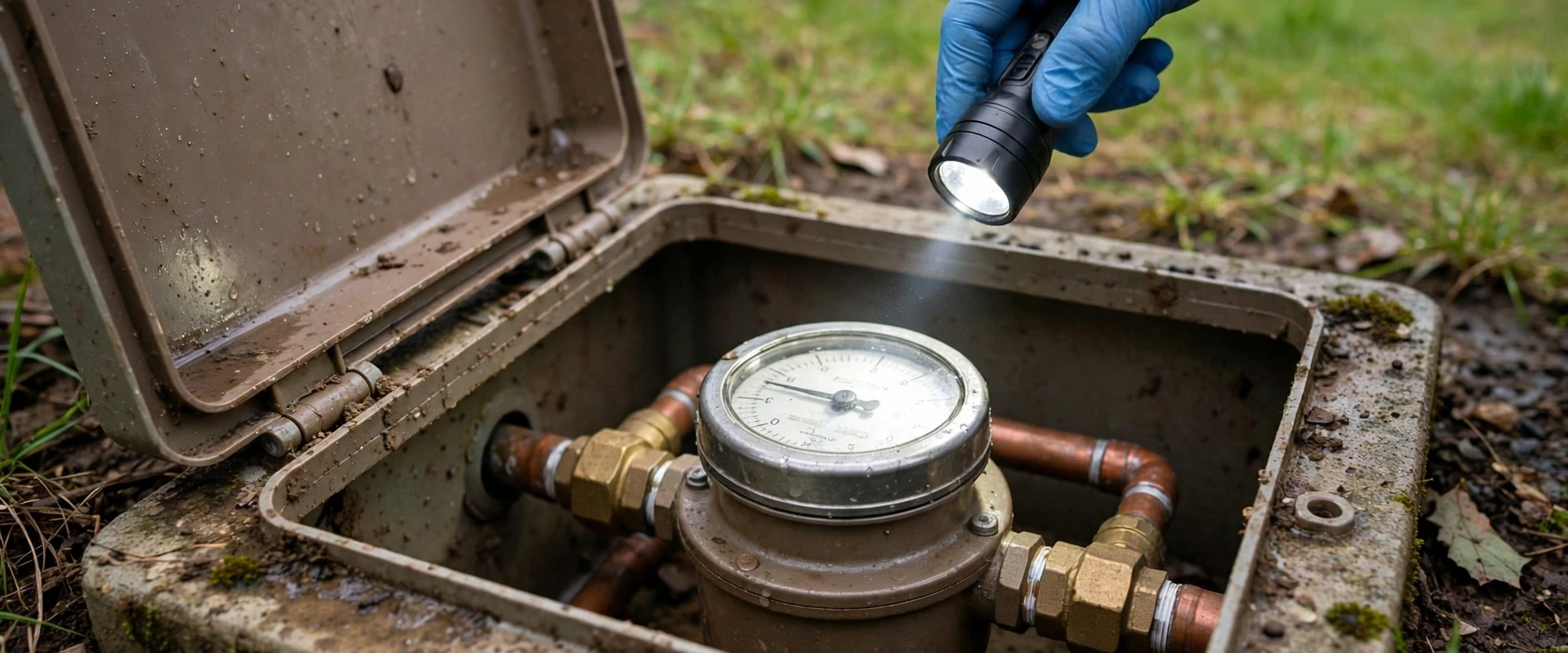
Find the meter
It is usually in a ground-level box near the street or the front of the lot. Lift the lid carefully and watch for insects.
Read the low-flow indicator
Most meters have a small triangle, dial or star that turns when any water passes, even a slow drip. If it is turning with everything off, water is moving somewhere.
Compare the numbers
Write down the register reading, wait 15 minutes without using water, and read it again. A change means a leak.
If the indicator is still, the leak may be intermittent, such as an irrigation valve or a toilet that fills now and then. Repeat the test after a few hours or overnight and compare the readings.
Check the toilets, water heater and irrigation first
Toilets cause more high-bill leaks than any other fixture. A worn flapper lets water slip from the tank into the bowl, and the fill valve tops the tank up again and again. To test, put a few drops of food coloring in the tank, do not flush, and wait fifteen minutes. If color shows up in the bowl, the flapper is leaking and the fix is inexpensive.
Next, look at the water heater. Check the base for moisture, the relief valve discharge pipe for drips and the supply connections for green or white crusting. A slow leak from a tank is a sign the tank itself is failing, as covered in water heater repair.
Then look outside. Irrigation zones that leak underground often show as a soft, green patch in the lawn, a puddle with no rain or a sprinkler head that never stops weeping. Turn off the irrigation controller, then rerun the meter test. If the indicator stops, the leak is on the irrigation side.
| Meter test result | Likely source | Next move |
|---|---|---|
| Moves with the main valve open, stops when you close it | A leak after the main valve, inside or under the house | Call for leak detection |
| Moves even with the main valve closed | A leak between the meter and the main valve | Call the utility or a plumber about the service line |
| Stops when irrigation is off | An irrigation line or valve | Repair or isolate the zone |
| Stops when you shut off the water heater supply | A leak in the hot water system | Water heater or hot line repair |
When the leak is under the slab or in the yard
If the meter moves, the toilets are fine and nothing visible is wet, the leak is probably in a buried line. That means a supply pipe under the slab, or the service line between the meter and the house. Signs include a warm spot on the floor, the sound of running water in a silent house, or a wet patch in the yard.
Plumbers find these leaks with electronic listening equipment that picks up the sound of water escaping from a pressurized pipe, plus moisture and pressure checks to confirm the section. The goal is to open as little as possible. You can read how that works on the leak detection page.
A leak in the supply under a concrete floor is a slab leak, and the repair options range from rerouting the line to replacing a section. The right choice depends on pipe condition, location and access, and a plumber should explain the price before any concrete is cut.
Cibolo: what the City's tools and policy say
City of Cibolo water customers can use My Water Advisor to watch usage. According to the City, a leak drop icon appears when the meter has not idled for 3 consecutive hours within a 24 hour period. The portal also shows a flow indicator in gallons per minute, with flow arrows.
That is the same logic as your manual meter test, run automatically. If the icon is on and you cannot explain it, treat it as a real leak signal and do the test above.
After a repair, the City's leak adjustment process may reduce the bill. It is a discount on the consumption charge, not full forgiveness. Your usage has to return to normal, and that can take up to two billing cycles. You submit the City's Leak Adjustment Form along with your repair receipts to City Hall at 200 S. Main St. The Utility Billing Office can be reached at 210-658-9900, extension 3131.
Green Valley SUD serves part of Cibolo, so check which name is on your bill. If it is GVSUD, call them about their own leak policy. Keep the plumber's invoice either way, because it is the proof the utility will ask for.
Meter moving with everything off?
Call the 24/7 line. A licensed plumber can trace the leak, and you hear the price before work starts.
What to do once you find the leak
Shut off the water to the affected area if you can, or at the main valve if you cannot isolate it. Take photos of any visible damage and note the meter reading before and after, since both help with a utility adjustment and with insurance. If water has reached walls, ceilings or electrical, call a plumber right away and stay out of wet areas near outlets.
Most homeowners policies cover sudden and accidental water damage but not the cost of finding or repairing a slow leak that went on for months. Ask your insurer before you assume either way.
Neighbors in Schertz and Selma see the same pattern when bills jump, and the meter test works the same way there.
Questions about high water bills in Cibolo
A toilet that runs constantly can waste hundreds of gallons a day, depending on how bad the leak is. The dye test above takes fifteen minutes and finds most flapper leaks.
The City has a leak adjustment process. It applies a discount to the consumption charge after the repair and does not forgive the whole bill. Usage must return to normal, which can take up to two billing cycles. You submit a form and repair receipts to City Hall.
My Water Advisor is a City of Cibolo tool. If your bill comes from GVSUD, contact them for their usage tools and leak policy.
Turn the controller off first, or run the test when no zone is scheduled to start. Otherwise a zone starting mid-test looks like a leak.
Responsibility for the service line depends on the utility and where the line runs, so ask your water utility before repairs. A plumber can locate the leak and give you a clear price first.